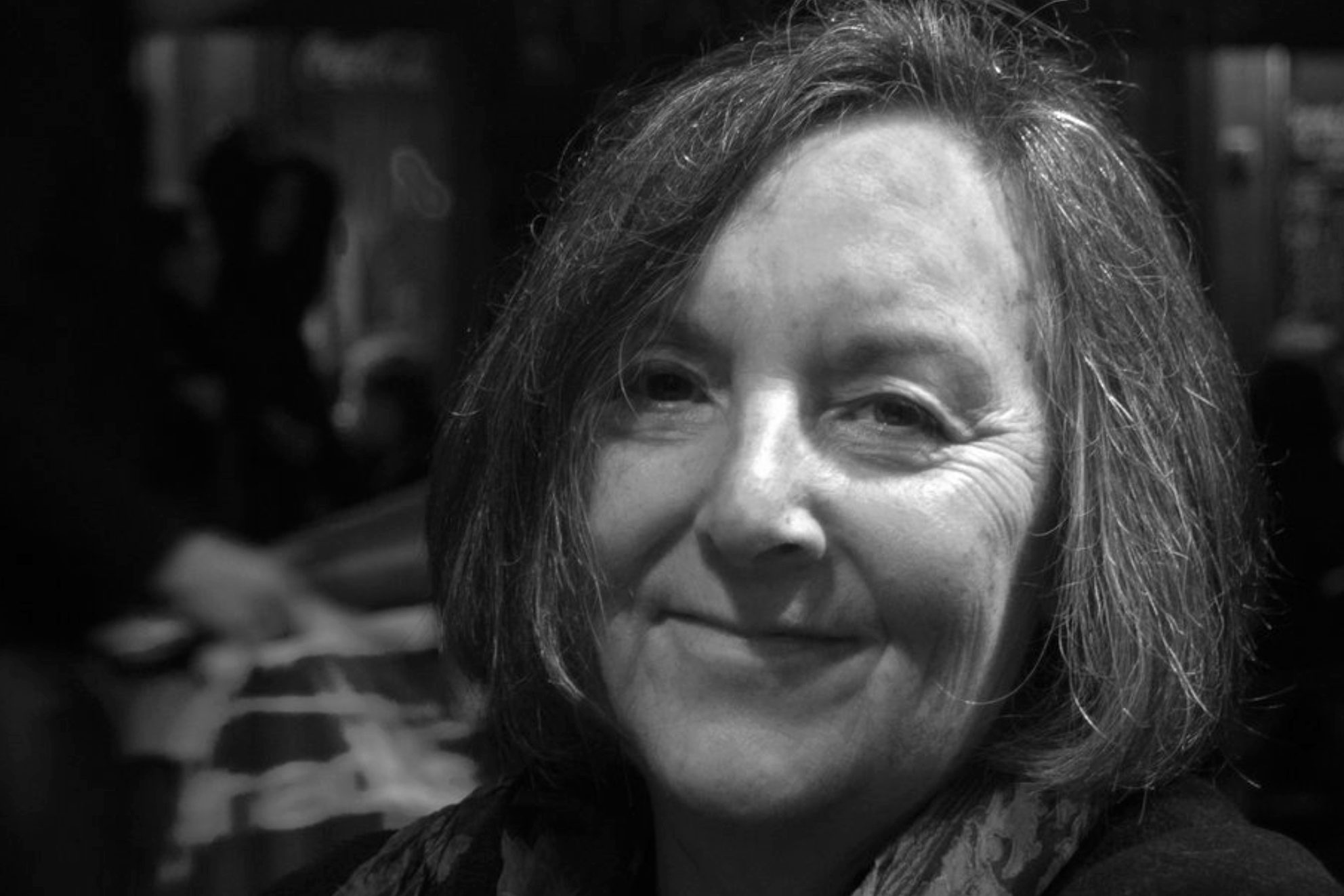
Terry J. Allen, a journalist, photographer, artist and immigrant rights activist who built a decades-long career reporting for publications including The Guardian, Harper’s and The New York Times, died April 10, 2026, at her home in East Montpelier, Vermont. She was 78.
Allen died of Creutzfeldt-Jakob disease, a rare and rapidly progressing prion brain disorder. She had been born in Fall River, Massachusetts, on November 24, 1947.
Her death drew remembrances from fellow journalists and activists across the Upper Valley and beyond, a reflection of a life that defied easy categorization. Allen was a reporter who could work a war zone and a clay studio with equal commitment. She wouldn’t hesitate to stand her ground with a notebook before an ICE agent, but could also, as those who knew her said, charm the edge off a cop.
For much of her career, Allen was an uncompromising news and feature writer and editor. Her bylines appeared in The Nation, The Boston Globe, Salon, New Scientist, In These Times and Harper’s, among many others. Photography came later, and it stuck.
Brave. Blunt. Serious about craft.
That combination drove the shape of her life from early on. In the late 1960s, she spent a year at the University of Chicago before dropping out and throwing herself into arts, travel and the counterculture. She enrolled in an intensive Japanese language program at Harvard, and then made her way to Japan by freighter, landing in Kyoto with a growing interest in pottery and Zen practice.
There, she studied under Nakazato Takashi, one of Japan’s most respected ceramic artists. She eventually built her own studio outside Kyoto, fusing what VTDigger described as her “rebellious Western creativity with Japan’s craft culture orthodoxy.” A lifelong Japanese friend and fellow artist said she “brought a new fresh wind into traditional Kyoto.” Allen navigated the formalities required to work and live in Japan while staying true to her politics, which included civil rights advocacy and opposition to the war in Vietnam. She got around Kyoto on a Honda 350 motorcycle, sometimes wearing a kimono for her side work as a bar hostess serving drinks and conversation to Japanese men. She needed the money.
In 1974, after six years in Japan, she returned to the United States and made her way to Marshfield, Vermont, where she connected with Adele Godchaux Dawson, a renowned herbalist. Vermont stayed with her. Her parents, Mordecai and Edith, had raised her in Fall River with conventional ambitions; Allen had long since decided those weren’t hers.
In her later years, she directed much of her energy toward supporting immigrants in Vermont, particularly farmworkers. The state’s dairy industry depends heavily on migrant labor, and Allen used her skills as a communicator and organizer to back those workers directly. She wasn’t writing about their conditions from a distance. She was helping.
The breadth of her work across five decades placed her in a particular tradition of American independent journalism: writers who reported from the margins of official power, took photographs that institutions didn’t commission, and treated accountability as a personal standard rather than an editorial policy. Her bylines in The New York Times sat next to years of work for smaller outlets that covered labor, science, politics and war without the backing of a large newsroom.
Allen is described by those who knew her as someone whose blunt persona could strain friendships as easily as her altruism could strengthen them. She gained the trust of grieving war victims and could just as readily irk people with her unyielding positions. That stubbornness wasn’t incidental to her journalism. It was the method. The Upper Valley Land Trust and other Vermont organizations she supported over the years reflect a region she chose deliberately, a place where she stayed.
Terry J. Allen is survived by friends, collaborators and the communities she worked alongside. Arrangements have not been publicly announced.
Written by
Dartmouth Independent StaffContributing writer at The Dartmouth Independent
View all articles →