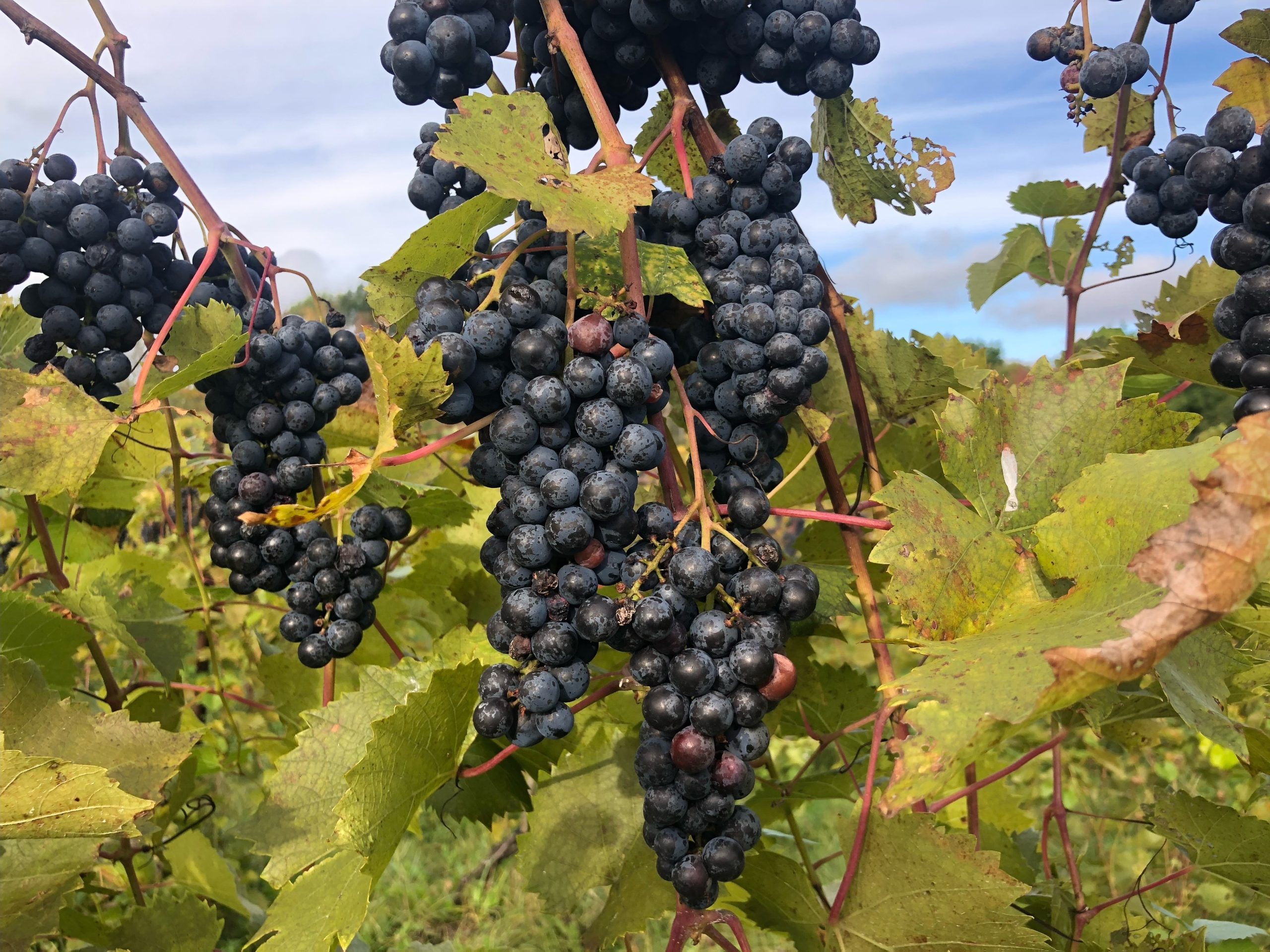
Vermont’s Champlain Valley is close to earning federal recognition as a wine region, a designation that could give the state’s vineyard owners a new tool for competing in a national market that’s long overlooked them.
The U.S. Alcohol and Tobacco Tax and Trade Bureau has issued a proposed rule that would classify the area as an American viticultural area, or AVA. As the Wine Institute explains, an AVA lets producers print a grape’s geographic origin on wine labels, but it comes with a catch: nearly all the grapes in any wine carrying that regional name must actually come from within the designated boundary. For the Champlain Valley, that boundary runs from the Lake Champlain shoreline east to the Green Mountains, and stretches from Rutland County all the way north to the Canadian border.
Kenneth Albert filed the petition for that recognition in 2022. He’s the founder of Shelburne Vineyard and a former president of the Vermont Grape and Wine Council, and he knows the stakes. His vineyard dates to 1998, putting it among the earliest commercial grape operations in the state. Ask him why the AVA designation matters, and he doesn’t hesitate.
“It gives us validity,” Albert said. “We’ll finally get some respect.”
He was laughing. But don’t mistake that for dismissiveness. The wine industry runs on reputation, and Vermont’s hasn’t always traveled well beyond state lines.
The Champlain Valley’s geography does something specific for grape growers. Lake Champlain buffers the region’s temperatures, keeping them slightly warmer than the surrounding Vermont countryside. That effect extends the growing season enough to make commercial viticulture workable. Shelburne Vineyard, for instance, grows hybrid varieties engineered to survive temperatures as low as 20 degrees Fahrenheit below zero. That’s not a quirky footnote. It’s the baseline reality of winemaking in this part of New England, and the lake effect is a genuine advantage over higher-elevation growing sites in the state.
Vermont’s wine sector is small compared to California or Oregon, but it’s been gaining ground. A 2018 University of Vermont study called winemaking in Vermont a “unique growth sector.” The numbers reflect that trajectory: VTDigger reported on the AVA push in April 2026, noting the growing commercial and regulatory momentum behind the proposal.
Kristen Carrese, who oversees marketing and exports at the Vermont Agency of Agriculture, Food and Markets, said the AVA label could do real work for agritourism specifically. There’s a growing segment of travelers who want the story behind the glass, who want to stand on the actual land where the grapes grew. Federal recognition connects those dots in a way that informal regional branding can’t.
“An AVA designation is an exciting opportunity to define the Champlain Valley as a distinct wine growing region that’s shaped by our specific climate, soils and geography,” Carrese said.
Winemakers talk about terroir, the full set of environmental conditions that shape what ends up in the bottle. The Champlain Valley has a credible claim to a distinct terroir: the lake’s moderating effect, the valley’s particular soils, the specific pitch of the land between the water and the Green Mountains. It’s not just marketing language. It’s the argument that the AVA petition rests on, the idea that wines from this corridor aren’t interchangeable with wines grown elsewhere in Vermont or New England.
There’s also a climate dimension. Rising temperatures are opening the door to grape varieties that wouldn’t have survived here 20 or 30 years ago. That’s a slow-moving shift, but it’s one that could expand what the region produces over the next several decades.
The TTB’s proposed rule is still working through the federal process. If it’s finalized in 2026, the Champlain Valley would join 89 other American viticultural areas, according to federal records, as an officially defined wine region. For Albert, that’s 15 words of regulatory text that would mean something tangible: his vineyard’s label would carry a place name that actually means something to buyers who’ve never set foot in Vermont.
Written by
Dartmouth Independent StaffContributing writer at The Dartmouth Independent
View all articles →