Greenland has a population slightly larger than Burlington, Vermont. That fact alone reframes the recent political firestorm that erupted when President Trump threatened to annex the Arctic island earlier this year, dragging a remote autonomous territory of Denmark into the center of global attention.
For Vermonters, the story carries familiar echoes. The Upper Valley sits in the shadow of the Green Mountains, shaped by glacial history, and the communities here understand what it means when distant power structures make decisions about land that belongs to someone else. Greenland’s story, it turns out, is not so distant.
Vermont journalist Adam Federman has reported from Greenland for multiple national publications and currently serves as a Reporting Fellow with Type Investigations. He lives near Middlebury and spoke recently on the Vermont Conversation podcast alongside Rob Reynolds, a Los Angeles-based artist who has traveled extensively through the Arctic with scientists, gathering images now featured in an exhibit called Zero Celsius at Mad River Valley Arts in the Mad River Valley.
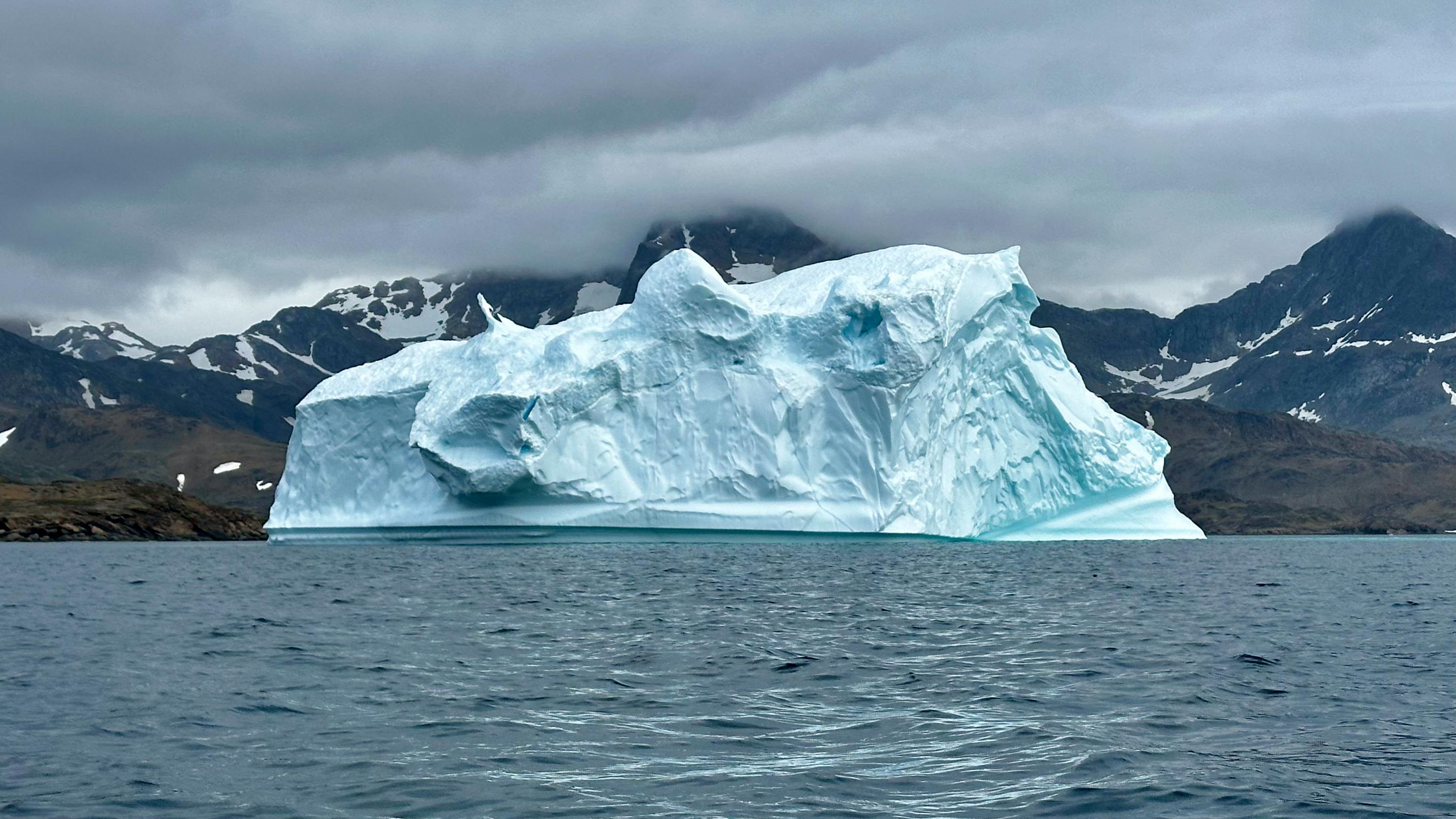
The two men bring very different lenses to the same place. Reynolds describes Greenland as “a place of wonder. It’s a place of awe. It’s a place unlike any other that I’ve ever been to.” His photographs document a frozen world in transition, and the exhibit running locally gives Upper Valley audiences a rare, visceral window into terrain most will never visit.
But Reynolds also pushes back hard against the political framing that has dominated headlines. What troubles him most about Trump’s threats, he said, is that people actually live there. The lesson Greenland offers humanity is about conservation, not acquisition. “We shouldn’t be thinking about taking it,” Reynolds said. “We should be thinking about keeping it frozen.”
Federman frames the situation in sharper political terms, calling Trump’s Greenland provocations “a new form of imperialism.” The Arctic is warming faster than any region on Earth. Some projections now place ice-free Arctic Ocean summers as early as 2030. That melting opens shipping corridors and exposes natural resources that were previously locked beneath ice, and the resulting scramble carries serious consequences.
The climate-driven transformation of the region raises “the prospect of open military conflict in a part of the world that has been spared,” Federman said. He finds that prospect terrifying. The race to exploit newly accessible resources carries “tremendously dangerous implications for the people who live in that part of the world.”
Those people, the Greenlandic people, are not passive observers. Greenland’s parliament has clearly rejected any notion that the United States could simply absorb the territory. Federman notes that Trump’s pressure has produced at least one unexpected outcome: it has catalyzed greater indigenous political power in the region. After many years of slow progress, Greenland now holds a seat at the table in ways it did not before.
Reynolds will join author Bill McKibben for a public conversation in Waitsfield on March 14, giving local audiences a chance to hear directly from someone who has stood on that ice and watched it recede.
For sports and outdoor recreation communities in the Upper Valley, the conversation carries a particular resonance. The region’s economy and culture revolve around seasonal snow, frozen rivers, and the rhythms of a landscape that climate change is already reshaping. Ice-out dates on the Connecticut River arrive earlier. Ski seasons grow shorter and less reliable. The Jakobshavn Icefjord, photographed in Reynolds’ exhibit, represents a more dramatic version of changes already underway in Vermont’s own backyard.
What happens in Greenland does not stay in Greenland. Rising seas from glacial melt will reach coastlines everywhere. New Arctic shipping routes will reshape global trade. And the political contest over who controls that melting terrain will define international relationships for decades.
The Vermont angle here is more than geographic curiosity. Two people with deep ties to this region have watched Greenland up close and returned with a shared warning: the island is not a prize to be claimed. It is a place where people have built lives, and a place whose frozen future matters to every community that depends on a stable climate, including this one.