Ashley Andreas did not take the straight road to her degree. She took Vermont’s version of it: unpaved, steep in places, and rerouted more than once before arriving somewhere real.
The 33-year-old Hartford Selectboard member and housing advocate grew up in Pennsylvania, spending her teenage years at the Milton Hershey School, a residential program for children from low-income backgrounds. The school gave her structure and opportunity, including an $80,000 scholarship toward higher education. But when she arrived at a large university after graduation, the support structures she had relied on disappeared.
“I come from a family with a history of substance abuse and was not set up mentally or emotionally to navigate the social scene of a large university,” she reflects. “I felt both isolated and different from my peers who came from strong nuclear families. I sank into myself and felt lost.”
After three semesters, her grades fell too low to continue. She left. She moved to Florida, then followed a relationship to Vermont’s Upper Valley in 2012, eventually working at a pizza shop in Hartford when she found out she was pregnant.
That pregnancy changed everything.
“That was the catalyst,” she says. “I grew up in poverty, and I knew I didn’t want to be poor for the rest of my life. I knew I didn’t want that for my kid. I also knew I was smart, but I just needed to find my passion.”
She ended the unhealthy relationship she had been in and started over, with her newborn daughter in tow.
In 2014, Andreas enrolled at the Community College of Vermont. CCV’s local learning center in the Upper Valley gave her the scheduling flexibility she needed to carry a full course load while raising her daughter. The arrangement was hard. She describes it plainly as tough. But she pushed through, and she found critical support along the way through VSAC counselor Merrilyn Tatarczuch-Koff, who now directs VSAC’s Education Opportunity Center. The EOC helps adult learners access career and education pathways, and for Andreas, that guidance was not supplementary. It was foundational.
Together, they worked through financial aid paperwork, identified grants and scholarships, and rebuilt the academic standing that had been damaged years earlier. Andreas raised her GPA high enough to restore eligibility for her Milton Hershey scholarship, the same funding that her earlier struggles had put at risk.
In 2016, she stood at commencement as the student speaker and recipient of the Leadership Scholarship.
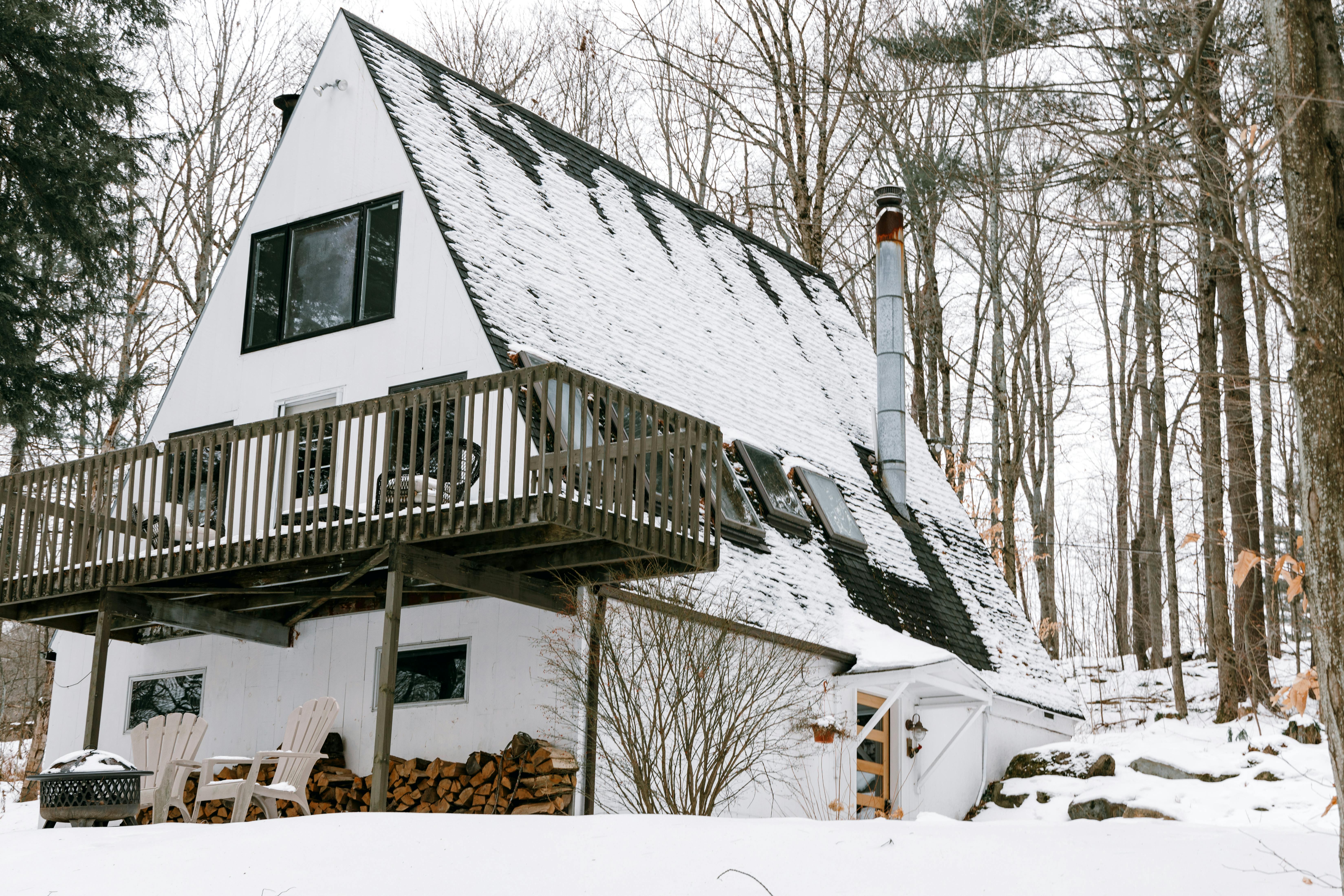
What began as a practical need to stabilize her life and her daughter’s future eventually led Andreas toward a specific and somewhat unexpected passion: environmental building practices. Sustainable construction and housing design became her focus, and the work she now does as a housing advocate in Hartford reflects that interest directly. Vermont’s housing crisis is not abstract to her. She has lived inside the pressures it creates.
Her story is one that college counselors and education advocates often point to when making the case for community colleges as genuine pathways rather than consolation prizes. Andreas herself represents what that argument looks like in practice. She did not enter CCV with momentum. She entered with a baby, a disrupted academic record, a limited support network, and the memory of having already failed once at the college experience.
What she found there was not just coursework. It was the right environment at the right scale, with guidance from someone who understood the financial complexity facing adult students returning to education after years away.
For students at Dartmouth, especially those who grew up watching family members struggle with poverty, addiction, or instability, Andreas’s path carries a specific kind of weight. The credential mattered. But the self-knowledge she built while earning it mattered more. She had to figure out not just how to pay for school, but what she actually cared about enough to stay.
She found it in buildings, in sustainable design, in the way physical structures can either serve communities or fail them.
That is the question she keeps asking now, from her seat on the Hartford Selectboard and through her housing advocacy work. What does it mean to build something that actually holds?