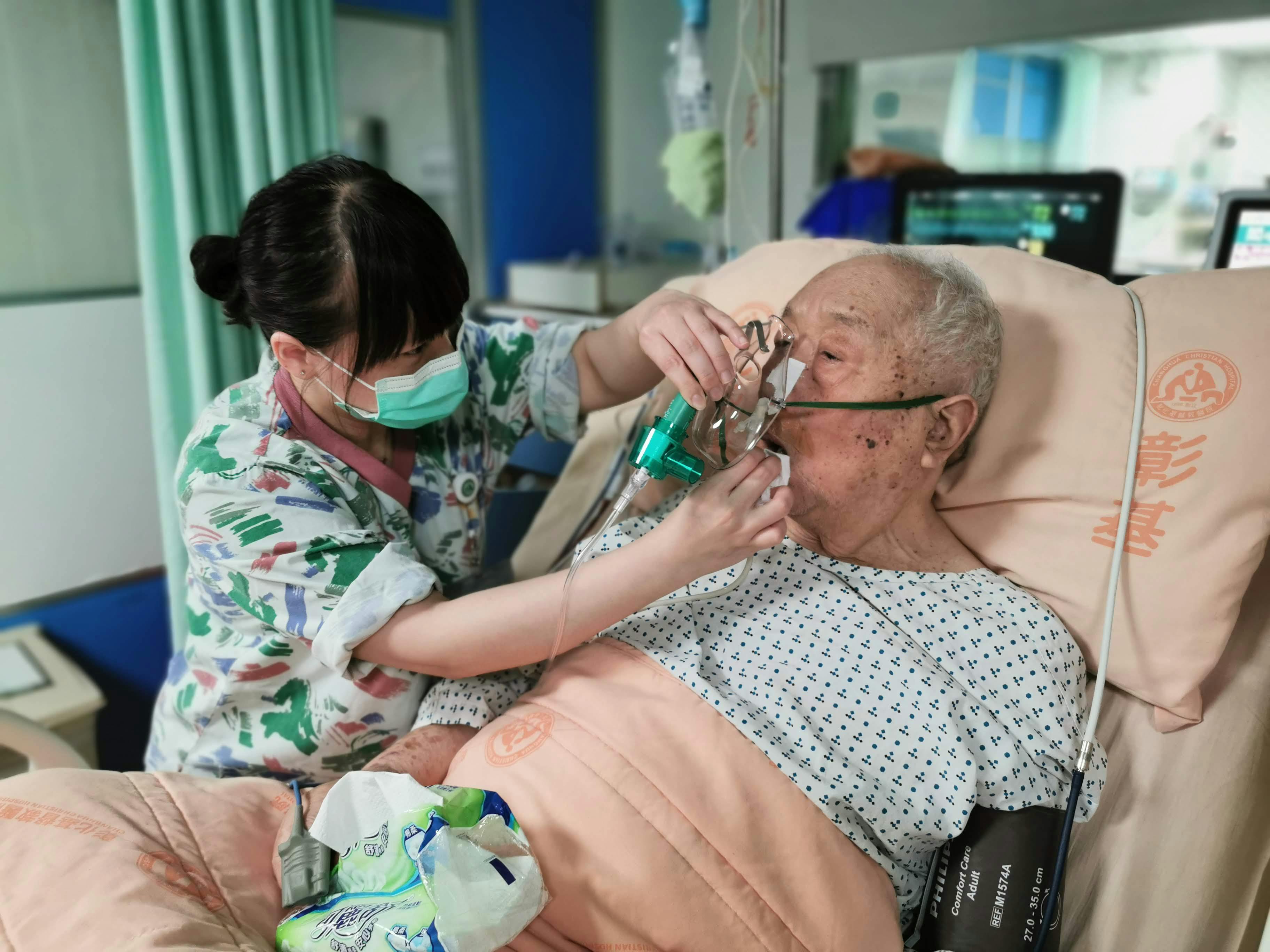
Lily Call passed her Licensed Nursing Assistant exam at 17 years old. That credential, earned last July after a summer intensive course and clinical rotations at Northeastern Vermont Regional Hospital, confirmed what she had been quietly building toward through four years at St. Johnsbury Academy: a future in health care.
Now a senior at STJA, Lily is preparing to pursue dual degrees in nursing and radiologic sciences in college. Her path there reflects something that public health advocates often point to as essential but undervalued, which is the power of early, hands-on exposure to care environments for students who might not otherwise see medicine as accessible to them.
Lily grew up in Waterford, Vermont, in a household with her mother, grandparents, and younger sister. Her family emphasized local connections and supported her in exploring every option available to her. They didn’t pressure her toward college, but they encouraged her to make an informed choice. She did exactly that.
Her interest in health care started through human services coursework at STJA, where she began to recognize a professional direction for what she describes as a natural empathy. She pursued internship observations at Hiller Orthodontics, Pines Rehabilitation and Health, and Kozlowski Dentistry in the St. Johnsbury area. Each stop gave her a slightly different window into what caring for patients actually looks like.
The LNA course came next. The clinical rotations at NVRH placed her alongside patients during some of their hardest moments. “Working with people and caring for them when they were struggling really fit me,” Lily said. “I learned so much about how people deal with stress and pressure. Those experiences nailed down for me that I’m on the right path.”
A job shadow at NVRH also exposed her to diagnostic imaging, sparking a parallel interest in radiologic sciences. That combination, bedside nursing and imaging technology, reflects the kind of broad, patient-centered thinking that rural health systems increasingly need. Communities like those in Vermont’s Northeast Kingdom face persistent shortages of trained health care workers, and students like Lily represent a critical pipeline.
But getting from Waterford to a college campus is not just an academic challenge. It is a financial one. Lily is a first-generation college student, and the application process, the FAFSA, the scholarship search, the financial aid forms, has been unfamiliar territory for her whole family. She connected with Trish Turner, a VSAC Outreach Counselor working through the GEAR UP college and career readiness program, and began meeting with her monthly.
Turner helped Lily with her scholarship essay, guided the family through FAFSA paperwork, and identified scholarships she might be eligible for. “College is a financial burden for us,” Lily said. “So I want to work as hard as I can to get as much assistance as I can to make this a possibility for me.”
That kind of support infrastructure matters more than it often gets credit for. First-generation students frequently possess the drive, the grades, and the vision. What they need is someone to explain the process, answer the questions that feel too basic to ask a stranger, and show up consistently. Programs like GEAR UP exist precisely to close that gap, and Lily’s experience illustrates why continuity of access to those resources shapes outcomes.
Outside academics, Lily served on student class council for all four years at STJA and spent two and a half years on tech crew and as a stage manager for school theater productions. She arrived as a freshman awed by the scale of the school. She leaves it as someone who found her footing across multiple corners of campus life.
Her trajectory, from a small town in Vermont to a licensed nursing credential to dual-degree college enrollment, is the kind of story that tends to get called exceptional. But Lily’s path also shows what becomes possible when students have access to real clinical experience, financial aid guidance, and mentors who show up month after month. The exceptional part, arguably, is not Lily. It is having the right supports in place at the right time.