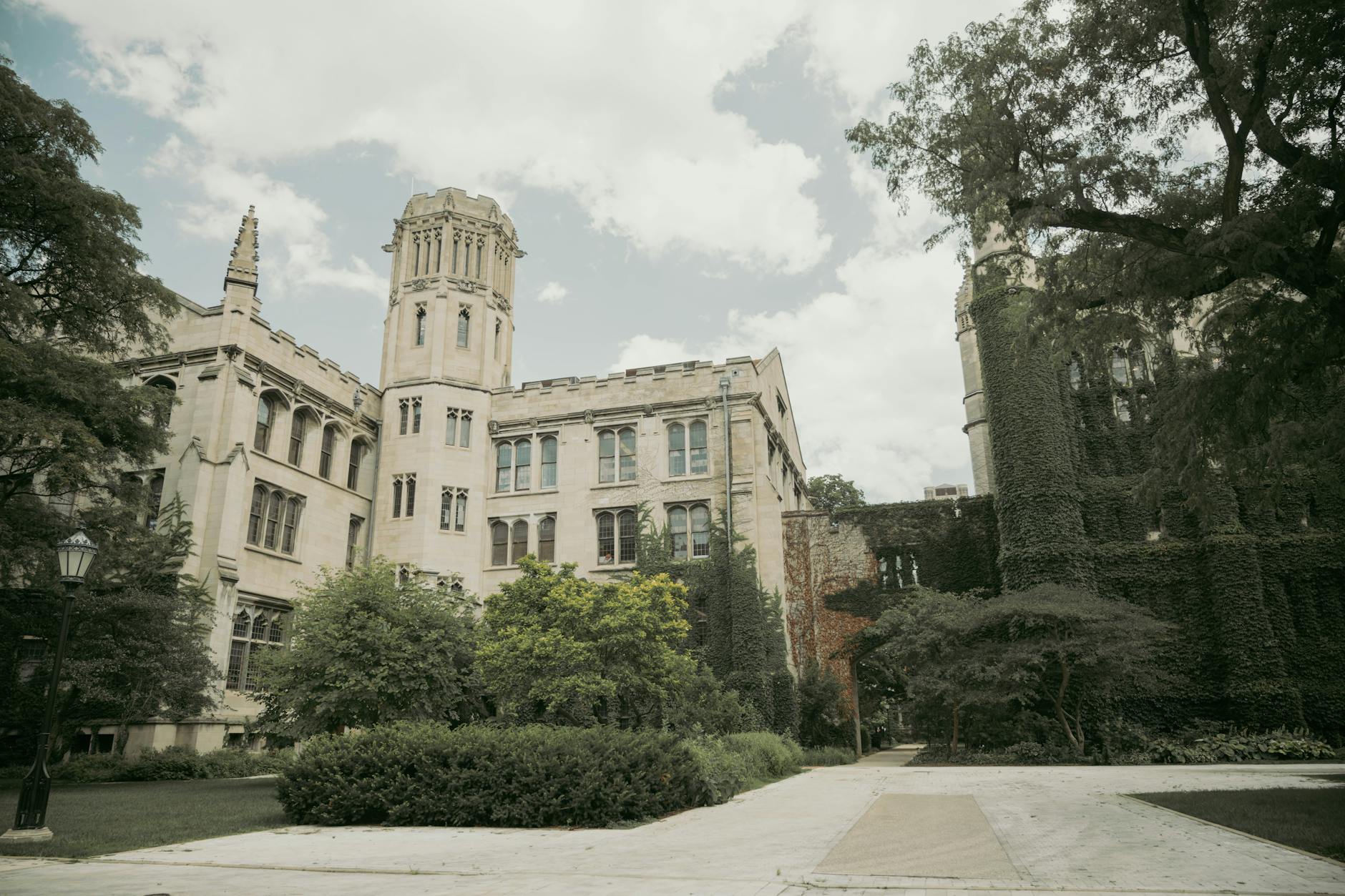
In a public lecture marked by sharp critiques of both major political parties, Kentucky Sen. Rand Paul addressed a crowd of roughly 220 students, faculty, and local residents at Dartmouth’s Rockefeller Center on November 14. Framing his talk around American history, Paul argued that the United States is living through its “best of times” in terms of health and global economics, despite what he described as short-sighted political narratives.
The event, part of the Rockefeller Center’s “Law and Democracy: the United States at 250” series, was co-hosted by Dartmouth Dialogues and the Dartmouth Political Union. It was moderated by Eli Moyse ‘27, the debate director for the DPU.
Paul, known for promoting limited government and individual liberties, compared current living conditions in the United States with those of the 19th century. Referencing improvements such as increased life expectancy and lower postpartum mortality rates, he said, “We live in the best of times with regard to health.” He also cited global gains in wealth distribution: “In 1820, 98% of people in the world lived on less than $2 a day. Now, less than 10% of the world lives on $2 a day … in every parameter there’s been a miraculous accumulation of wealth.”
Transitioning to current policy debates, Paul criticized both Democratic and Republican stances. He pushed back against former President Donald Trump’s trade policies, particularly the use of tariffs. Paul said the rationale that the U.S. is “being ripped off by the Chinese” and that “the middle class is dying” misrepresents economic realities. “Tariffs are a way of transferring the blame to a country or person,” he said.
Paul also objected to the Republican Party’s growing alignment with Trump’s policy agenda. He cited GOP support for a federal spending bill he opposed, which he said would increase the national deficit by $2.4 trillion over a decade. “I voted ‘no’ because there has to be somebody left in the Republican party that thinks deficits are a problem,” Paul said. “I do it at my own peril with regard to the president and his people, but I think it’s worth it.”
Paul further denounced recent U.S. military actions in Central America, where airstrikes targeting alleged drug traffickers have reportedly killed at least 80 people since September, according to The New York Times. “We don’t just kill people,” he said about the strikes, which were authorized during Trump’s presidency. “It’s the dumbest thing I’ve ever heard, but I’m a distinct minority and I get vilified.”
On domestic social programs, Paul expressed opposition to expanding government assistance. He argued that college students and “able-bodied people” should not receive Supplemental Nutrition Assistance Program benefits. “We just should have some tough love and [you should] go work,” he said. “Life’s not easy, college is too expensive, so work.”
Audience reactions to Paul’s remarks were mixed. Norwich resident Mimi Simpson Tu’89 attended to hear a different perspective but challenged Paul’s historical framing. “There’s no argument over a 200-year time period. You’re talking about health and life expectancy, of course it’s a lot better [over time],” she said.
Landon Parrish ‘29 said he attended the event because Paul often votes against mainstream Republican positions. “The biggest thing that stuck with me was how outspoken he was against the current Republican establishment,” Parrish said. He added that he “particularly liked” Paul’s criticism of U.S. militarization in Central America.
Sen. Paul’s visit highlighted the divisions within American conservatism and reflected ongoing debates about the role of government, partisanship, and foreign policy. The event was part of Dartmouth’s ongoing efforts to maintain institutional independence while fostering political dialogue. As the college continues to host political figures across the spectrum, the event offered students and community members a chance to engage directly with policy discussions that stretch beyond the presidential campaign trail.