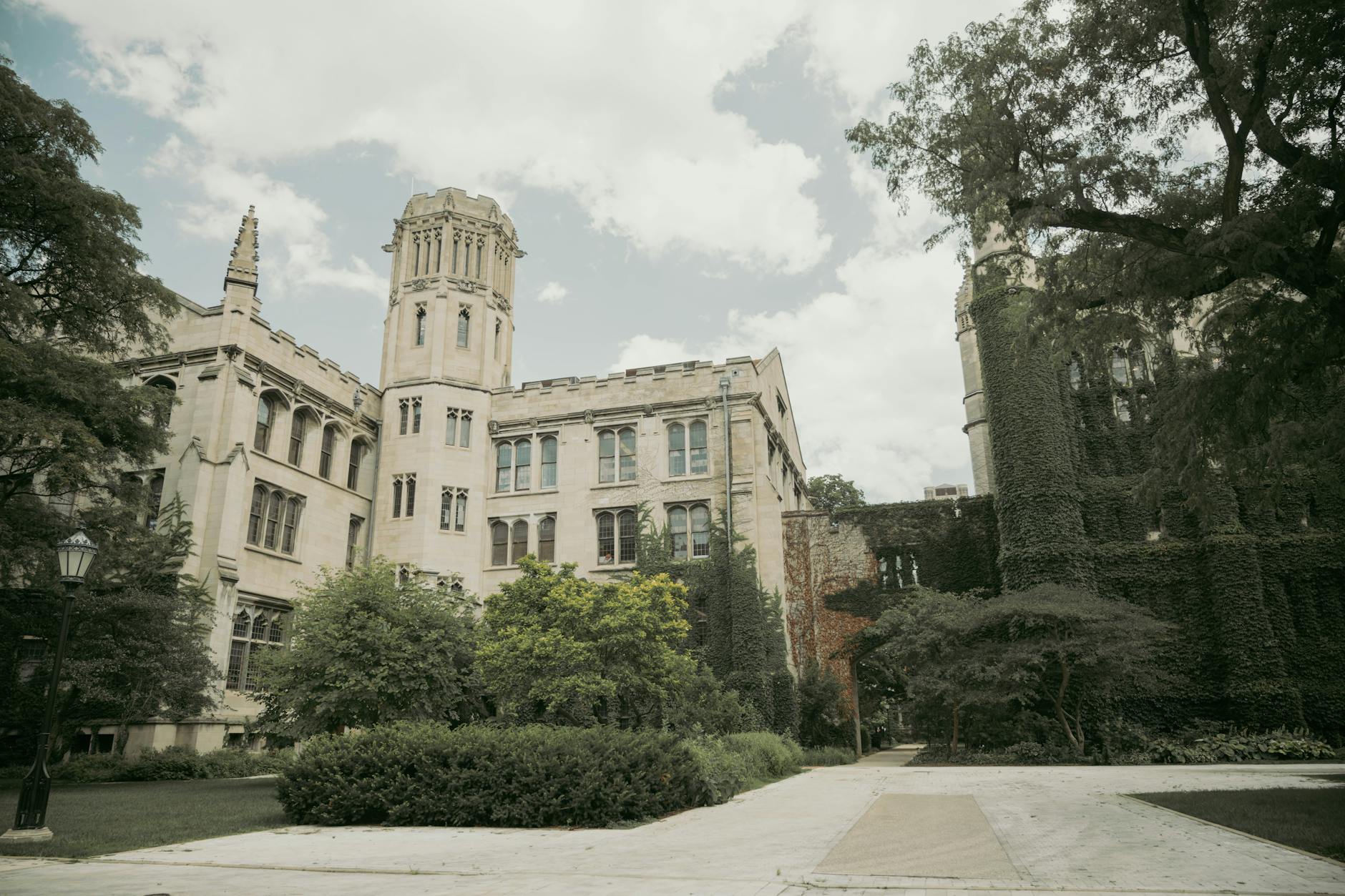
Andi Lloyd ‘89, a former climate scientist and longtime biology professor, returned to Dartmouth in October 2025 as co-pastor of the Church of Christ at Dartmouth College. Lloyd, who spent about 25 years teaching at Middlebury College, discussed her path from ecological research to ministry in a recent interview with The Dartmouth.
Lloyd’s return brings her back to campus decades after graduating in 1989 with a major in geography. In the interview, she described the move as both personal and professional, and said she has enjoyed being back in what she called “the life and energy of a college campus” while “rediscovering Dartmouth and learning how it has changed and remains the same.”
Lloyd’s career has included research on climate change in Alaska and Siberia, a long tenure at Middlebury focused on high-latitude forests, and later formal theological training that led to her ordination. According to the interview, she left Middlebury to study at Yale Divinity School and was ordained in the United Church of Christ in 2022.
In describing how she first gravitated toward ecology, Lloyd said she arrived at Dartmouth intending to study biology but found she was not drawn to many required courses. She said geography offered a better fit because it allowed her to study “plants and trees” in a way that felt “holistic and interdisciplinarily,” and helped her understand “why a landscape and its ecological communities look the way they do.” From there, she went to graduate school and earned a master’s degree in biology and a Ph.D. in ecology and evolution.
At Middlebury, Lloyd said she worked on the impacts of climate change and led students on trips to Alaska nearly every summer. She described her research period as exciting, marked by collaborative projects and work with a range of scientists. At the same time, she said, her early belief that she could “change the world” through science became more complicated over time.
In the interview, Lloyd framed her eventual shift into ministry as not rooted in a belief that her scientific work was unimportant. Instead, she said she had long felt “a very palpable sense of God” and a quieter desire to explore faith. She pointed to the fall of 2017 as a turning point, when a friend encouraged her to attend church. Lloyd said she found a community that shared many of her questions and beliefs, and within months felt drawn to religious life more fully. She said a pastor helped her articulate that ministry was what she needed to do, leading her to divinity school and eventually the work of pastoring.
Lloyd also emphasized connections she sees between her former academic role and her work as a pastor. In the interview, she said she now thinks of both careers as “expressions of the same thing,” describing climate science as motivated by a desire to better understand the world and live more sustainably, and her Christian tradition as calling believers to “love God and our neighbors and care for creation and this natural world.” She said she has experienced “an ethos of respect and care” in both settings.
She also described similarities in institutional culture between academia and the United Church of Christ. According to Lloyd, decision-making in her denomination “resides with the congregation,” which she compared to how academic communities operate. In both contexts, she said, leadership involves helping people “discern and decide the path forward together.”
On the relationship between climate change and theology, Lloyd said in the interview that she views climate change as a matter of justice. She described the Judeo-Christian concept of justice as an ordering of society that allows all people to thrive, protects the poor and vulnerable, and liberates the oppressed. Lloyd said climate change fits within that framework because, in her view, “the people who did the most to cause the problem will suffer the least, while those who did the least suffer the most.” She also said she holds the earth to be sacred and described large-scale environmental destruction as “desecration,” with climate change a driver that makes it “a matter of Christian concern.”
Looking ahead, Lloyd said she does not expect to return to a research-focused career, describing that phase as an “amazing chapter” that is now over. Still, she said she plans to continue working on and thinking about climate change. She noted that she co-wrote a book about climate change a couple of years ago and wants to write more that brings together ecology and theology.
Lloyd also said she would like to find a way to teach at Dartmouth, with an emphasis on convening students and community members to discuss climate change. In the interview, she described climate change as an issue of “existential importance” and said gathering people to talk about it feels central to her ministry.