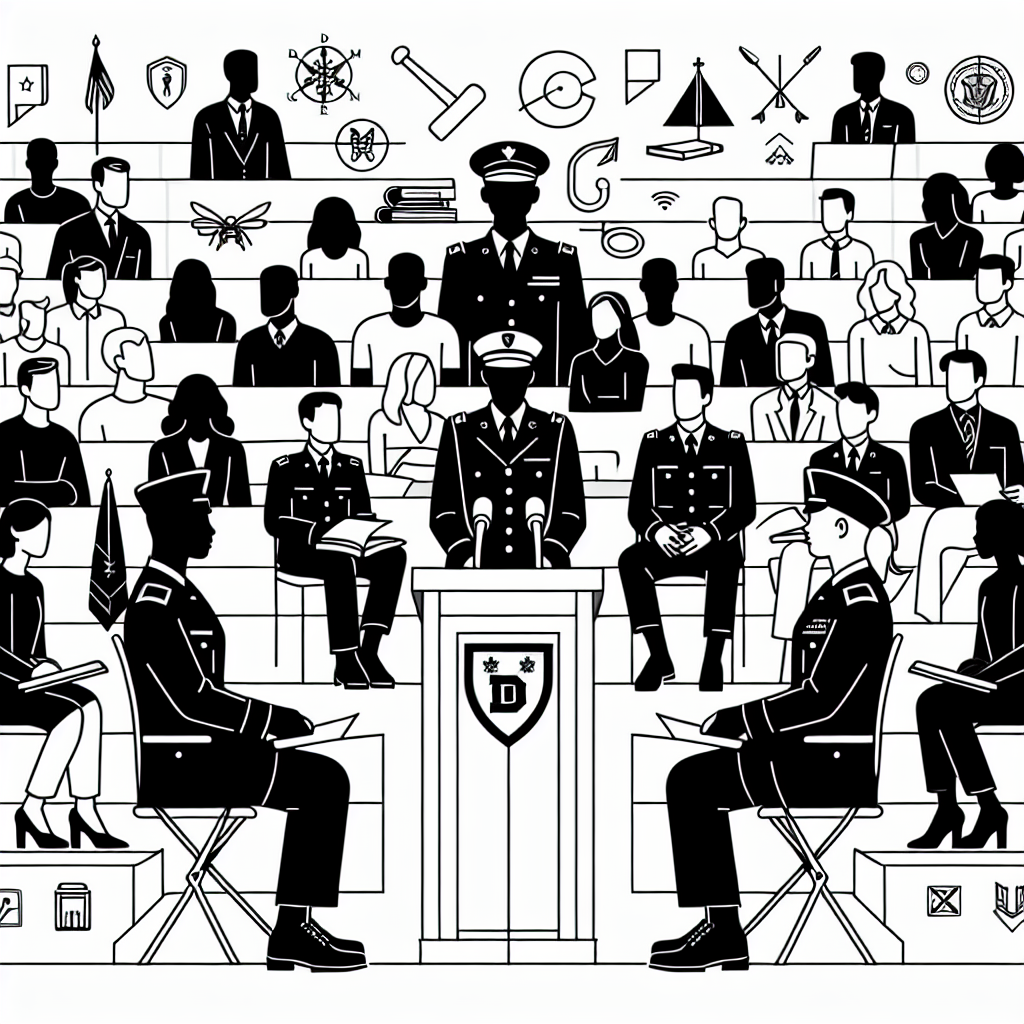
College President Sian Leah Beilock announced Dartmouth’s intention to expand its Reserve Officers’ Training Corps program during the annual Veterans Day Recognition Breakfast on November 11. The announcement comes amid a broader initiative to bolster military-related programs and support communities of service on campus.
In her remarks, Beilock outlined goals to not only increase the number of ROTC cadets but also double the undergraduate veteran population. She emphasized the importance of making Dartmouth a leader in fostering service-minded students.
“At Dartmouth, we want to be leaders in recruiting and creating those committed to service through the military, government and other careers,” Beilock said. “We want to ensure that their experience and voices are heard in our classrooms because it makes us all better.”
Dartmouth currently hosts the Ivy League’s smallest ROTC program, typically enrolling between 15 to 20 cadets. This year, however, the program has grown significantly, now totaling 32 students. Of those, 27 come from the Classes of 2028 and 2029. According to Ian Short, director of Dartmouth’s ROTC program, the incoming 2029 cohort is the largest freshman class the program has seen since the Vietnam War era.
“With the College’s focus, led by [President Beilock’s] office, on expanding the number of both undergraduate veterans and ROTC members, we’ve seen a dramatic rise,” Short said. “Her commitment to students being admitted to ROTC and programs like expanding the staff rights show that the College really does notice and care about this portion of the community.”
The Veterans Day breakfast also included the presentation of the James Wright Award for Distinguished Service, given this year to two Dartmouth alumni veterans: Air Force veteran Thomas E. Byrne ’55, Tu’56, and Marine Corps veteran Peter “Mike” Gish ’49. Nathan Bruschi ’10, a founder of Dartmouth Uniformed Service Alumni and an executive committee member, presented the awards.
Bruschi emphasized the role of Dartmouth’s alumni in shaping a legacy of public service. “Dartmouth has a manifest destiny when it comes to educating students to do public service,” he said. “One of the missions we have at the Dartmouth Uniformed Service Alumni is to inspire students to serve through the incredible stories of the alumni that have come before them and done great work.”
Speaking about the honorees, Bruschi described Byrne as someone who supported the Dartmouth and Hanover communities well beyond his military service. Gish, who served as a combat painter, was held up as an example of how artistic interests can contribute meaningfully to service.
“Who would have thought that if you were interested in the visual arts, that military service can be this incredibly powerful way to serve,” Bruschi said. “But through [Gish’s] work, we know that that’s possible. We hope that our students see a bit of themselves in the awardees and believe that public service is something they should one day pursue.”
Currently, Dartmouth offers ROTC through the U.S. Army only. A College spokesperson clarified that there are no current plans to expand to Navy or Marine Corps programs, though collaboration occurs when possible. “For students affiliated with the Navy or Marine Corps, we coordinate with the Army ROTC program to include them in training and leadership activities whenever possible, and we proudly recognize them alongside their peers during the commissioning ceremony at Commencement,” said Jana Barnello.
President Beilock’s announcement signals a renewed institutional commitment to service-oriented education and veteran engagement. As the ROTC presence on campus grows, faculty, staff, and alumni continue working to ensure that military-affiliated students find a place of recognition and support at Dartmouth.