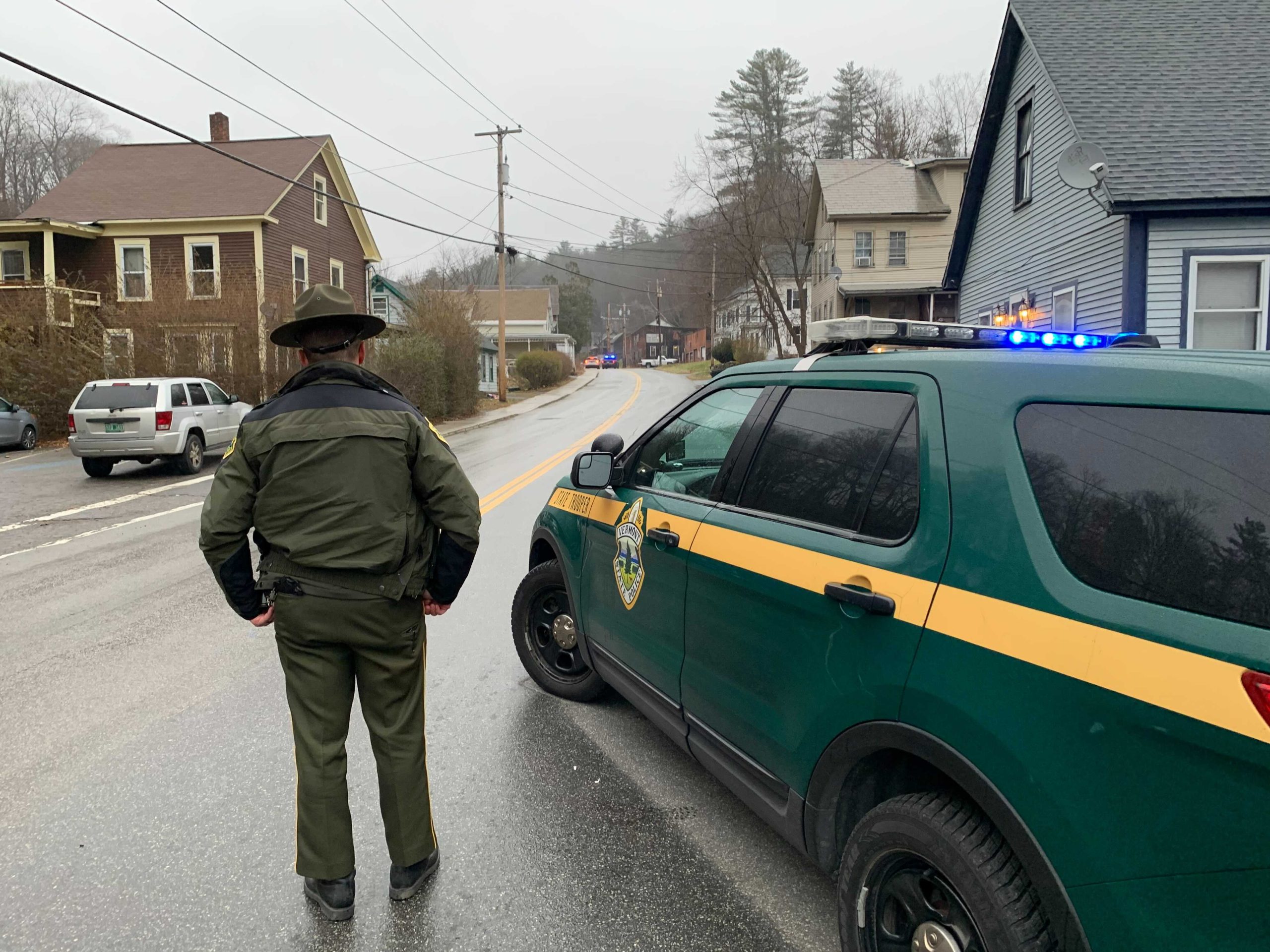
Black drivers in Vermont are 40% more likely to be searched during a traffic stop than white drivers, according to a study released this month that shows racial disparities in the state’s traffic policing have climbed back to pre-pandemic levels.
The report, produced by University of Vermont economist Stephanie Seguino and co-authors Nancy Brooks of Cornell University and Pat Autilio of the Vermont Racial Justice Alliance, draws on traffic stop data from 2015 to 2024. It finds that while Vermont officers make fewer stops today than at their 2017 peak, the race of a driver continues to predict who gets pulled over and whose car gets searched.
The findings carry direct relevance for Upper Valley residents and Dartmouth students who drive in Vermont. Hanover sits roughly 40 miles from Brattleboro, one of the communities the report flags by name.
In Bennington, Brattleboro, and Rutland, police stopped Black drivers at more than double their share of the driving population between 2022 and 2024. That disparity had briefly narrowed during the pandemic. It’s back.
Statewide, Hispanic drivers were stopped at a rate 30% above their share of the driving population. Bennington stands out as the worst case, where Hispanic drivers are stopped at nearly three times their population share. Williston, a suburb of Burlington, also records nearly double the expected rate for Hispanic drivers. Both Bennington and Williston post stop rates per 1,000 residents that are roughly four times the national average.
“The reality is that those improvements have not been persistent. They’ve not been permanent,” Seguino said. “In many ways, we’ve returned to the racial disparities that existed prior to Covid.”
The contraband hit rate tells its own story. When police search a vehicle, they find contraband less often in cars driven by Black or Hispanic drivers than in cars driven by white drivers. Researchers treat that gap as a statistical indicator of biased decision-making at the point of search, because it suggests officers are applying a lower evidentiary threshold to drivers of color. The Vermont Racial Justice Alliance, which co-produced the research, has flagged that pattern in prior reports as well.
Search rate trends offer a more complicated picture. The gap in search rates between Hispanic and white drivers has closed, converging by 2024. The gap for Black drivers has also narrowed, though Black drivers are still searched at a meaningfully higher rate.
Pat Autilio, the independent data analyst who contributed to the report alongside Brooks, said he doesn’t want to read too far into what the numbers explain.
“More people of color are getting searched, and police are finding fewer contraband. It’s still the case, and that doesn’t seem to get better,” Autilio said.
His hesitance is worth taking seriously. The data documents outcomes; it doesn’t resolve why those outcomes persist, and the researchers are careful not to claim it does.
None of the police departments contacted for the report responded to requests for comment, according to VTDigger’s coverage of the findings.
The study is an update to earlier work, adding 2024 data to a series that now spans nearly a decade. Vermont’s Racial Equity Task Force, established in response to earlier rounds of this research, has tracked these metrics since the Seguino team published its initial findings. The data trail is long enough now that the Covid dip can’t be treated as a trend. It was an interruption.
For Dartmouth students organizing around racial justice issues, or faculty at Geisel and Tuck studying institutional bias, the report offers a dense empirical base. The Vermont data are cleaner than most because the state has required standardized stop reporting since 2015, giving researchers an unusually consistent time series to work with. That consistency is what makes the rebound in disparities so hard to explain away as a data artifact. The numbers have been collected the same way for nine years, and they show the same thing.
Written by
Dartmouth Independent StaffContributing writer at The Dartmouth Independent
View all articles →