Chittenden County State’s Attorney Sarah George will not charge six protesters arrested during a federal immigration raid in South Burlington last month, drawing sharp condemnation from Vermont’s top law enforcement officials.
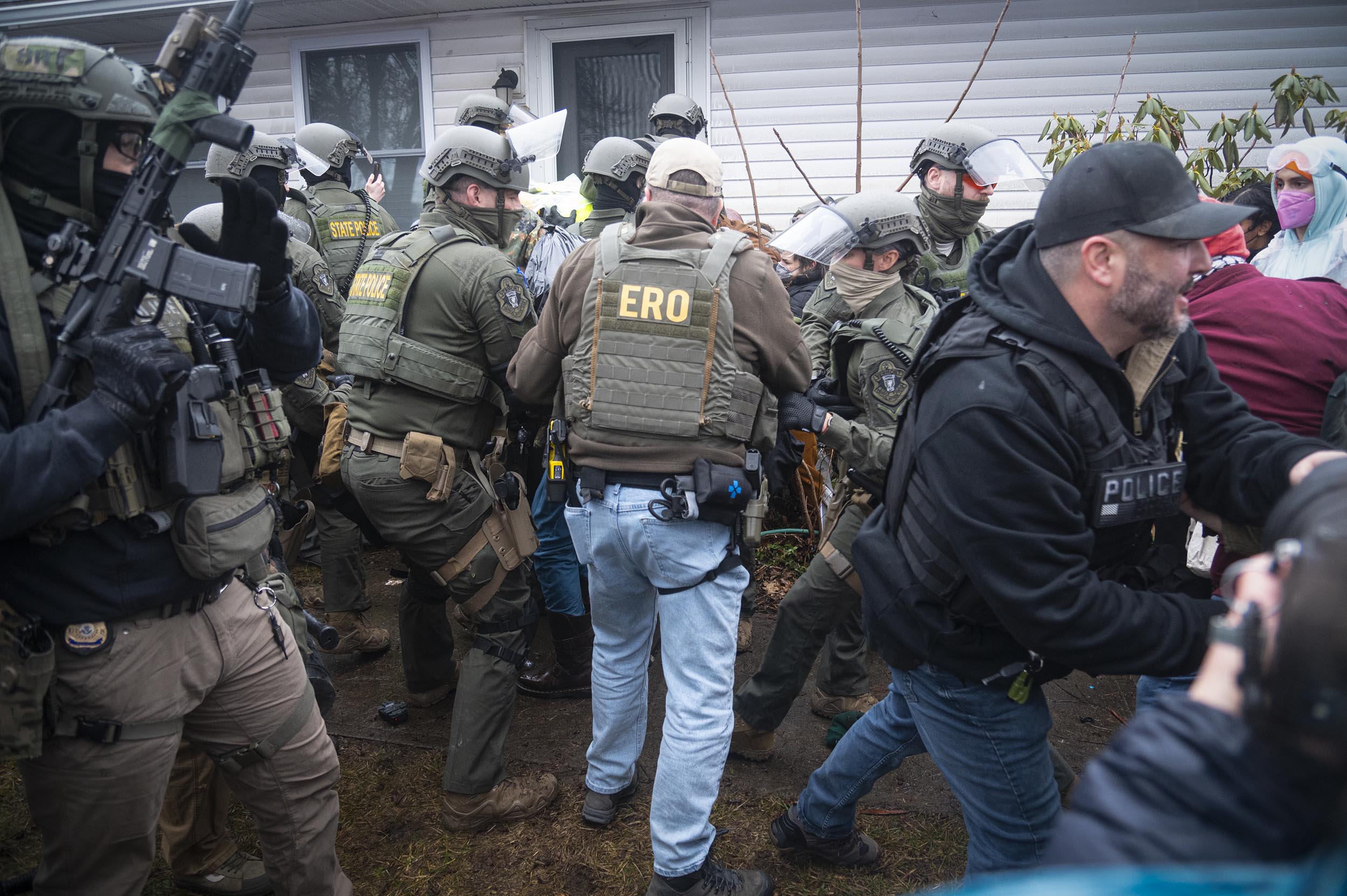
The March 11 enforcement action centered on a Dorset Street house where U.S. Immigration and Customs Enforcement agents detained three people. Federal judges have since released all three, and the raid was later found to have been triggered by a case of mistaken identity. Six protesters were arrested by day’s end, three by Vermont State Police and three by Burlington police, on charges including disorderly conduct and assault on a law enforcement officer.
George announced her decision Wednesday.
She said her office analyzed each case to find where the harm originated and who caused it. “I see the purpose of prosecution to be, in part, to heal harm caused by the person being charged,” George said in her statement. She acknowledged that some protesters went “beyond civil disobedience into unacceptable and perhaps criminal behavior,” including the three cited by Burlington police, but she also said some officers “agitated, who escalated, and who responded in a way that may be ultimately deemed legal, but was also unacceptable.”
“So to charge these six individuals with no criminal records, and expect that they bear the burden of all the harm caused that day, is not something I was interested in our office being a part of,” she wrote.
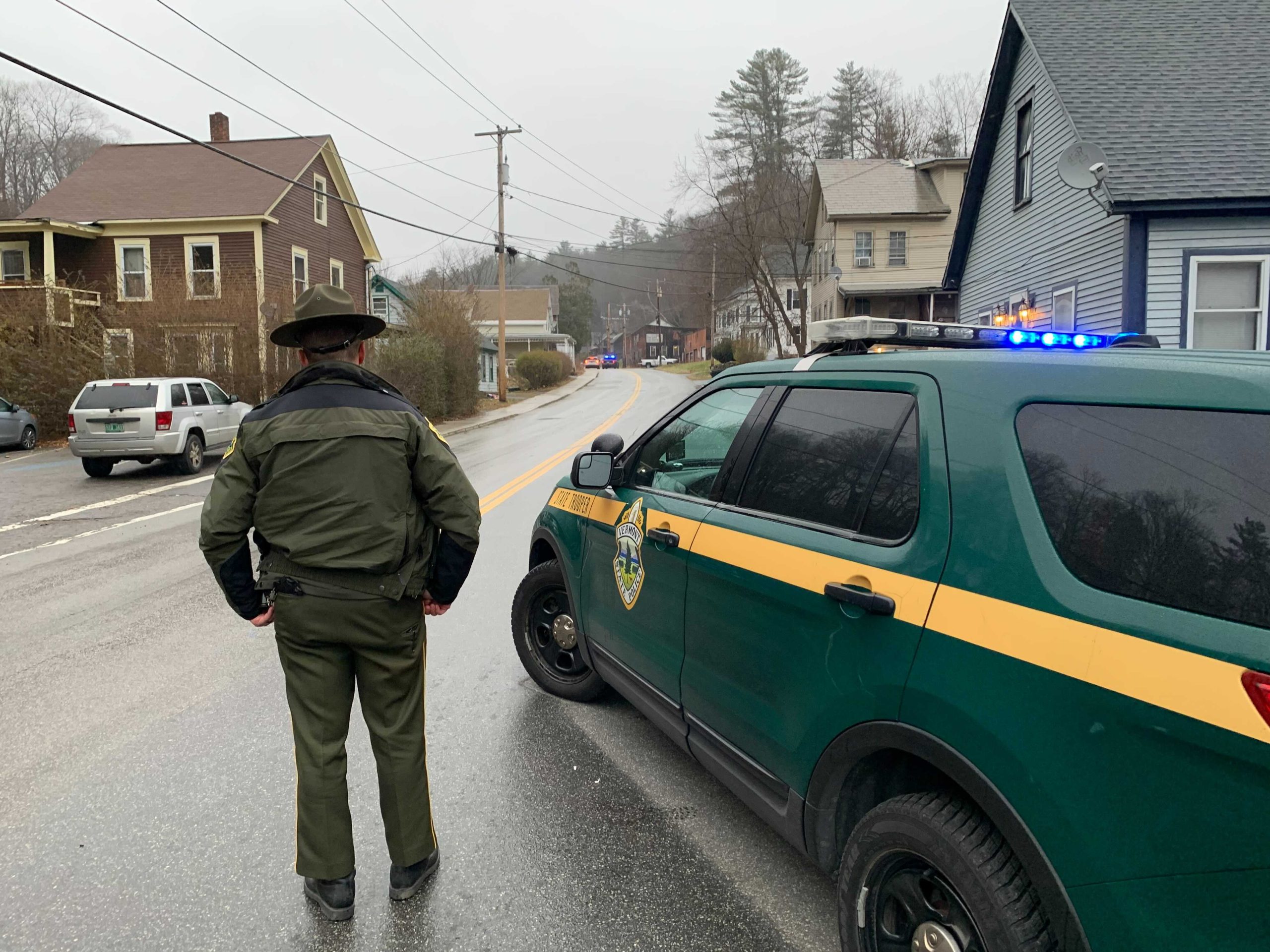
Vermont Public Safety Commissioner Jennifer Morrison and Vermont State Police Director Col. Matthew T. Birmingham pushed back hard. In a joint statement Wednesday afternoon, they said they took direct offense at any suggestion that law enforcement shared equal responsibility with protesters for criminal behavior on Dorset Street. They called George’s decision “a disheartening decision that sets a dangerous precedent.”
The rebuttal didn’t stop there. “Lawbreakers in Chittenden County already seemed to know they can act with impunity,” Morrison and Birmingham said.
They warned that declining to prosecute would likely embolden future crowds at similar events to cross into criminal conduct, putting officers and the public at greater risk. The standoff on Dorset Street was widely reported, including by VTDigger, as the first major federal immigration enforcement action in Vermont under the current administration’s crackdown.
The tension on both sides ran high throughout the daylong standoff. Police and protesters traded confrontations outside the house while ICE worked inside. By the time arrests came, the scene had already generated significant statewide attention and put Vermont’s law enforcement agencies in an unusually visible position amid broader national debate over immigration enforcement practices.
George’s call fits a broader pattern among some local prosecutors who have declined to treat immigration protest cases the same way they would treat standard criminal matters, citing questions of proportionality and the complexity of who bears moral responsibility when federal and local law enforcement actions are themselves contested. Vermont’s state criminal prosecution structure gives county state’s attorneys significant independent authority over charging decisions, meaning Morrison and Birmingham have no direct power to override George.
What makes the South Burlington case particularly complicated is the mistaken identity finding. ICE went to the Dorset Street address believing a target was present. He was not. The three people taken into custody were released by federal judges. That sequence put protesters in the unusual position of having physically resisted an enforcement action that turned out to have no lawful basis at the targeted location.
George’s statement addressed this indirectly. She said she weighed who contributed to the harm and whether prosecution would actually serve justice, rather than simply reinforce the authority of agencies whose conduct she found questionable that day. Morrison and Birmingham’s response framed her reasoning as an attack on officers who were doing their jobs under difficult circumstances and following lawful orders.
The six people arrested on March 11 had no prior criminal records, according to George’s statement.
Written by
Dartmouth Independent StaffContributing writer at The Dartmouth Independent
View all articles →