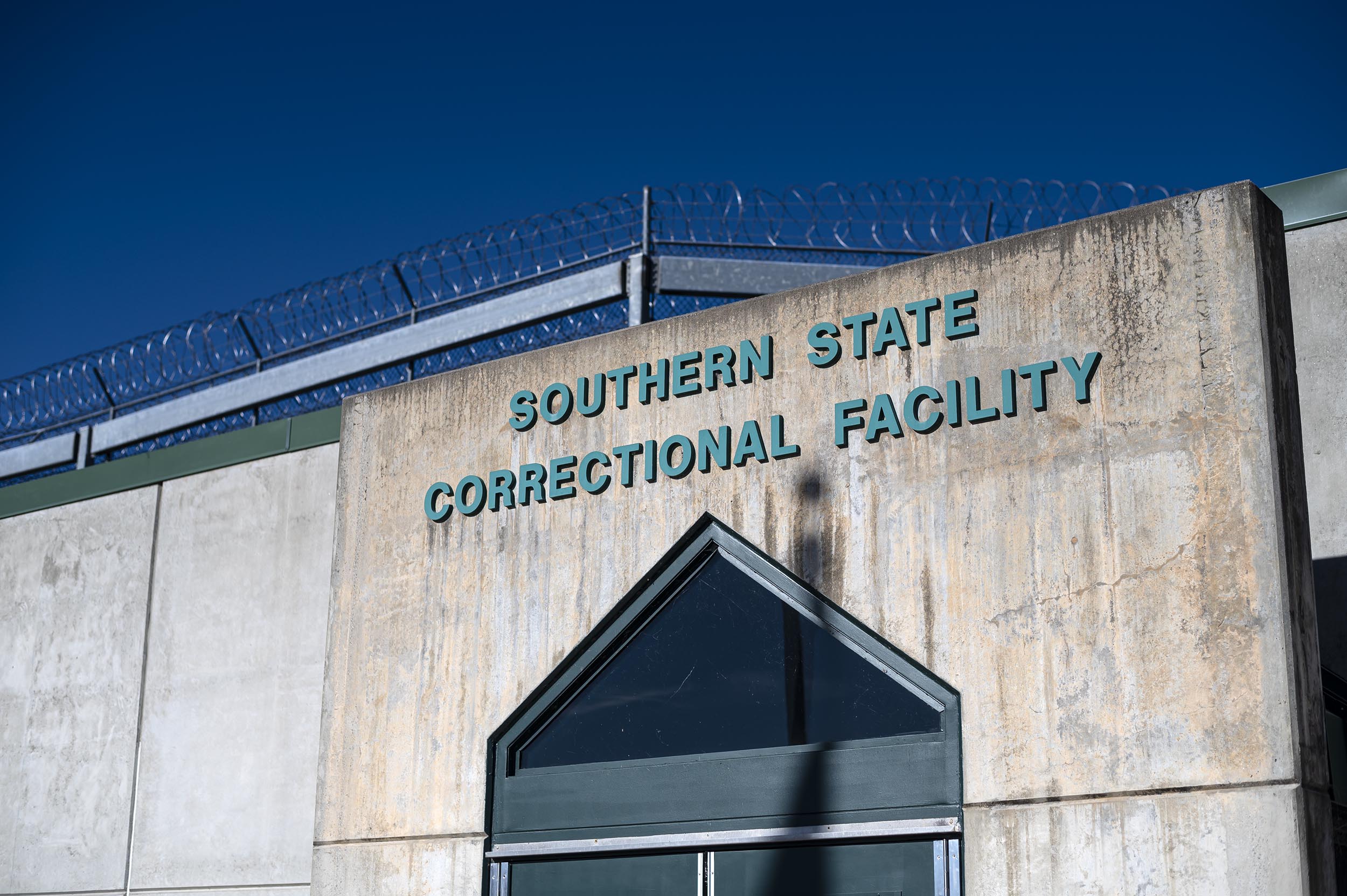
Vermont lawmakers left their committee room Wednesday and walked into a razor wire courtyard at Southern State Correctional Facility in Springfield, getting a firsthand look at the state prison that houses the men with the most complex medical needs in the corrections system.
The visit came as the House Corrections and Institutions Committee continues writing and reviewing laws that govern the Vermont Department of Corrections. How legislators see a prison, not just read reports about one, can shape the decisions they make about funding, policy, and oversight.
Southern State, the newest prison in Vermont, opened in 2003 and holds about 380 people. It’s also where the corrections department concentrates its most intensive medical care, running the largest infirmary in the state system alongside a hospice unit. For anyone tracking health access in Vermont’s incarcerated population, that concentration of resources matters enormously.
The lawmakers, some in jeans and some in suits, stood among green picnic tables in the courtyard while men in blue jumpsuits and orange coats moved past them toward the cafeteria. It was lunch. Everyone called it “chow time.”
Inside, the contrast with other facilities was immediate.
Rep. James Gregoire, R-Fairfield, bought a cinnamon roll from the prison’s cafe, which incarcerated men both staff and shop at, and split it with Rep. Will Greer, D-Bennington. The gym, with high ceilings and a full-size basketball court, drew visible surprise from both. Gregoire and Greer said it was roughly three times the size of the gym at the St. Albans prison they’d toured two weeks earlier.
Greer said the contrast with Vermont’s women’s prison in South Burlington was starker still. When he visited that facility in December, the gym floor was completely covered with temporary beds, a direct result of overcrowding. No basketball. No room to spare.
“It felt like a school,” Gregoire said of the Springfield facility’s bright hallways and shiny floors, adding that St. Albans, by comparison, felt dark and cramped.
That gap between facilities isn’t just an aesthetic one. For a state corrections system that relies on Southern State as its medical hub, the condition of the building has direct consequences for health outcomes. Incarcerated people with serious illness, chronic conditions, or end-of-life needs end up here. The Vermont Department of Corrections has long pointed to Southern State’s infirmary and hospice unit as evidence that the system can meet complex care needs, but critics argue that concentrating those resources in one facility creates access problems for people housed elsewhere.
Lawmakers also walked through living units, where they shook hands and talked with incarcerated people free to move within their units under supervision. One man told them about his day-old vanilla coffee from the cafe. In the honors dorm, where cells stay unlocked and men can move without a guard present, a man named Richard was reading when the group passed through.
The department had blocked press access to a similar committee tour two weeks ago, according to VTDigger, but later extended an invitation for independent coverage. Wednesday’s visit was open to a reporter.
For anyone thinking about rural health equity in Vermont, Southern State’s role deserves attention. Springfield sits in Windsor County, a region where community health resources are thinner than in Chittenden County, and where the nearest major medical center is Dartmouth Health across the river in Lebanon, New Hampshire. Incarcerated patients transferred for outside care face long rides and limited support networks. The hospice unit at Southern State exists in part because getting dying patients to outside facilities is genuinely hard.
The committee doesn’t set the corrections budget alone, and a single tour doesn’t produce legislation. But lawmakers who’ve stood in that courtyard and walked those hallways now carry a physical sense of what the facility is, not just what the annual reports say it is. Greer’s comparison to the overcrowded women’s prison suggests at least some members are already connecting what they saw in South Burlington in December to what they saw in Springfield this week.
Written by
Dartmouth Independent StaffContributing writer at The Dartmouth Independent
View all articles →