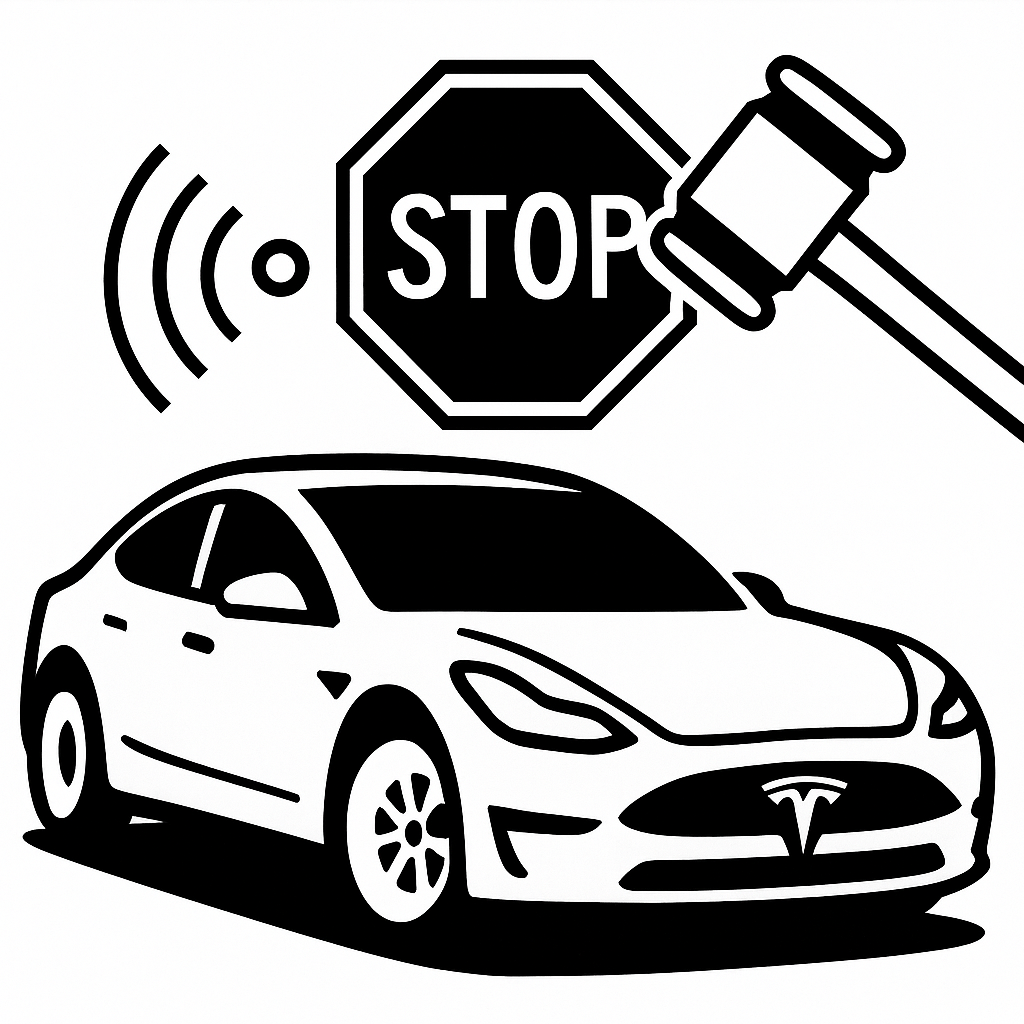
The National Highway Traffic Safety Administration (NHTSA) has launched a formal investigation into Tesla’s Autopilot system, targeting over 28 million vehicles equipped with the company’s proprietary driver assistance software. The probe centers on whether Tesla’s Autopilot contributes to traffic violations when engaged, particularly in scenarios where drivers may rely on the system to navigate complex traffic environments. This inquiry marks a significant escalation in regulatory scrutiny of autonomous driving technologies, raising questions about the intersection of software design, driver behavior, and public safety.
At the core of the investigation is a pattern of incidents in which Tesla vehicles allegedly committed traffic infractions while Autopilot was active. These include running stop signs, failing to yield, and improper lane usage. The NHTSA’s Office of Defects Investigation is examining whether the system’s design permits or encourages such behavior, either through inadequate safeguards or misleading user expectations. The agency has requested extensive data from Tesla, including software logs, video recordings, and internal documentation related to Autopilot’s decision-making algorithms and user interface prompts.
Tesla’s Autopilot system, which includes features such as lane centering, adaptive cruise control, and automatic lane changes, has been marketed as a tool to enhance driver convenience and reduce fatigue. However, it is not classified as a fully autonomous system. Drivers are expected to remain attentive and keep their hands on the wheel. Despite these requirements, numerous reports and videos have surfaced showing drivers disengaged or inattentive while Autopilot is active. This behavioral gap between intended use and actual practice is a focal point of the NHTSA’s inquiry.
The scale of the investigation is unprecedented. Covering nearly every Tesla sold in the United States since 2014, the probe encompasses multiple vehicle models and software versions. The agency’s decision to include such a broad swath of vehicles suggests systemic concerns rather than isolated incidents. It also reflects growing unease among regulators about the real-world implications of semi-autonomous systems, especially as their adoption accelerates across the automotive industry.
From a technical perspective, the challenge lies in determining whether the software’s logic contributes to unsafe driving patterns. Autopilot relies on a combination of sensors, cameras, and machine learning algorithms to interpret road conditions and make driving decisions. If these algorithms prioritize speed or convenience over strict adherence to traffic laws, the system could inadvertently encourage violations. For example, if Autopilot routinely rolls through stop signs or fails to detect certain signage, it may condition drivers to expect and accept such behavior.
The NHTSA’s investigation will likely examine how Tesla calibrates its software to balance efficiency with legal compliance. This includes analyzing how the system responds to ambiguous situations, such as unmarked intersections or temporary road closures. It also involves assessing the clarity and frequency of driver alerts, which are intended to prompt human intervention when the system encounters limitations. If these alerts are too subtle or infrequent, drivers may overestimate the system’s capabilities and disengage prematurely.
Tesla has previously defended its Autopilot system, citing internal data that suggests a lower accident rate when the feature is engaged. The company argues that Autopilot enhances safety by reducing human error, which accounts for the majority of traffic accidents. However, critics contend that such comparisons are misleading unless adjusted for variables such as road type, traffic density, and driver demographics. Moreover, the presence of traffic violations, even in the absence of collisions, raises concerns about broader impacts on road safety and legal accountability.
The outcome of the investigation could have significant implications for Tesla and the broader autonomous vehicle sector. If the NHTSA identifies design flaws or regulatory violations, it could mandate software updates, impose fines, or even require recalls. Such actions would not only affect Tesla’s operations but also set precedents for how driver assistance technologies are regulated. Other automakers developing similar systems may need to reevaluate their own software architectures and user engagement protocols.
Beyond the immediate regulatory consequences, the probe touches on deeper questions about the role of automation in public infrastructure. As vehicles become increasingly software-driven, the boundary between human and machine responsibility becomes blurred. Policymakers must grapple with how to assign liability when systems fail or when users misuse them. This includes revisiting legal frameworks that were designed for human drivers and adapting them to accommodate hybrid control models.
The investigation also underscores the importance of transparency in software development. Autonomous systems operate as black boxes to most users, making it difficult to understand how decisions are made or errors occur. Regulators and researchers have called for greater access to source code, training data, and performance metrics to enable independent audits and accountability. Without such transparency, public trust in automation may erode, especially in high-stakes domains like transportation.
In the short term, Tesla may face reputational challenges as the probe unfolds. Media coverage and public discourse around Autopilot have already intensified, with renewed scrutiny of past incidents and corporate messaging. The company’s response strategy whether cooperative or combative will influence how stakeholders perceive its commitment to safety and regulatory compliance. Investors, customers, and policymakers will be watching closely as the investigation progresses.
Ultimately, the NHTSA’s inquiry into Tesla’s Autopilot system represents a critical juncture in the evolution of vehicle automation. It highlights the need for rigorous oversight, empirical validation, and ethical design in technologies that directly affect public welfare. As the automotive landscape shifts toward greater autonomy, the lessons from this investigation will shape not only Tesla’s trajectory but also the standards by which all future systems are judged.