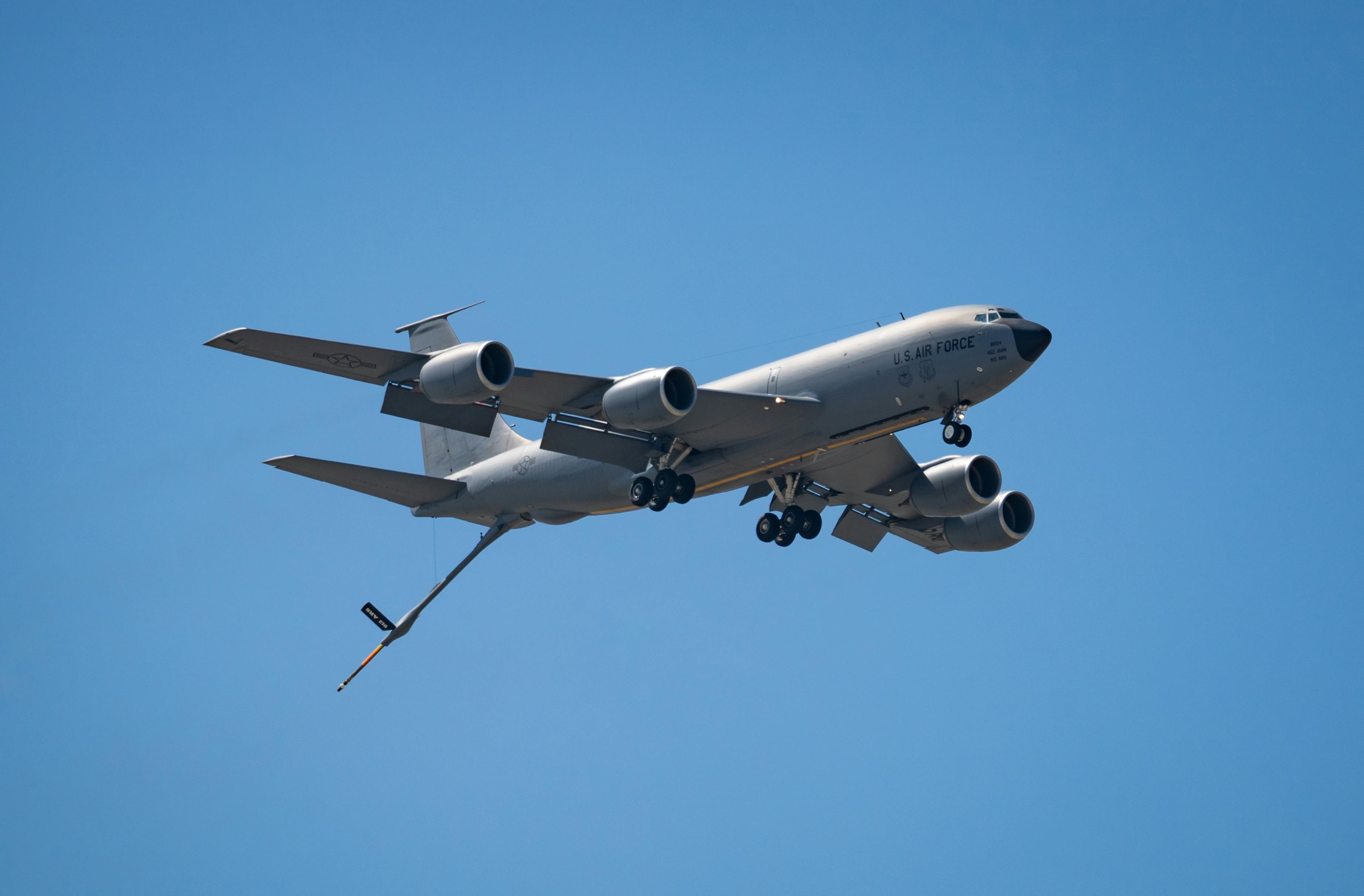
Six American service members died Thursday when a KC-135 refueling aircraft crashed in western Iraq, the Department of Defense announced Friday, pushing the total U.S. death toll in the Iran war to 13 since the conflict began on Feb. 28.
U.S. Central Command confirmed in an early-morning social media post that four of the six crew members aboard had initially been reported dead, before a follow-up post clarified that no one survived. Officials said the circumstances of the crash remain under investigation.
“The loss of the aircraft was not due to hostile fire or friendly fire,” Central Command said in the post. Joint Chiefs of Staff Chair Gen. Dan Caine reinforced that assessment at a Pentagon press conference Friday, adding that the incident occurred “over friendly territory in western Iraq while the crew was on a combat mission.”
The crash compounds an already grim week for U.S. forces. The Navy also reported a fire aboard the USS Gerald R. Ford, an aircraft carrier operating in the Red Sea in support of the conflict the administration has branded Operation Epic Fury. U.S. Naval Forces Central Command said the fire broke out “in the ship’s main laundry spaces,” was not combat-related, and was contained. Two sailors sustained non-life-threatening injuries. The Navy said the ship’s propulsion systems were undamaged and the carrier remains fully operational.
Caine offered condolences for the Gerald R. Ford crew during the briefing. “We believe and hope that everyone will be okay,” he said.
The briefing came as military officials signaled an escalation in offensive operations. Caine told reporters Friday was expected to be the “heaviest day of kinetic fires” since the war began. He said U.S. forces are focused on dismantling Iran’s naval capabilities, including its minelaying operations and capacity to attack commercial vessels in the region.
“Iran still has the capability to harm friendly forces and commercial shipping,” Caine acknowledged, even as he pointed to military progress over the past two weeks. He described ongoing operations as “complex, dangerous and difficult.”
Defense Secretary Pete Hegseth attended the briefing and claimed Iran’s new supreme leader had been “wounded and likely disfigured,” though he offered no independent verification for the assertion. Hegseth also used the occasion to criticize journalists for not framing coverage of the war more favorably before pivoting to acknowledge the troops killed in the aircraft crash.
The war, now in its third week, has drawn significant attention to how the administration communicates both military gains and casualties to the public. The death count has climbed sharply: seven service members had died before Thursday’s crash. Six more died in a single day, none of them from enemy fire.
For students and faculty at Dartmouth tracking the conflict, the numbers carry particular weight. The College draws students from military families across the country, and several campus organizations focused on veterans’ affairs have been monitoring the casualty figures since the war’s outset.
The nature of Thursday’s deaths raises questions that the investigation will need to answer. A non-combat aircraft crash over friendly territory, killing an entire crew, points to potential mechanical failure, navigational error, or some combination of factors. Central Command has not offered a timeline for when findings will be released.
Hegseth’s criticism of press coverage at the same briefing where he honored the fallen drew a sharp contrast. Accountability for how this war is being waged, and how information about it is being managed, matters as much as the operational updates themselves.
The administration has framed Operation Epic Fury as a necessary campaign to protect U.S. interests and allies in the region. But with the casualty count now at 13 and the military’s own top officer describing the mission as dangerous and difficult, the gap between official messaging and ground-level reality is growing harder to ignore. The public, and the press, should keep pressing for answers.