
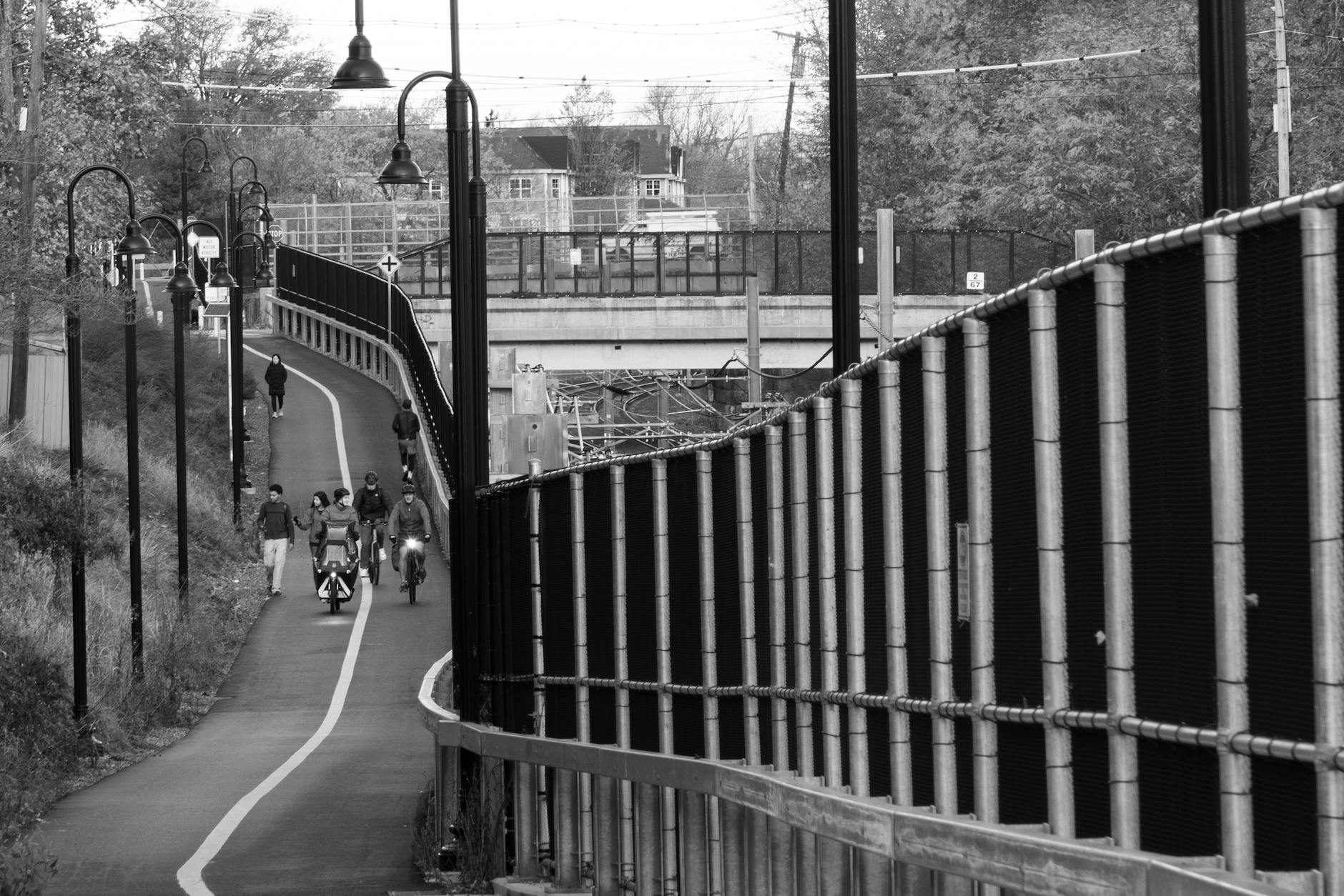
Dartmouth will receive $285,000 in state funding to help develop a 9.8-mile recreational pathway connecting New Bedford and Fall River, according to the Massachusetts MassTrails grant program announcement.
The town will collaborate with New Bedford and Westport on the Northern Scenic Greenway project, which requires a $90,000 local match. The South Coast Bikeway Alliance will also participate in the initiative, according to state records.
The proposed multi-use path will run off-road through all three communities and fill what the state describes as a “key gap” in the South Coast Bikeway network. Both New Bedford and Fall River already have completed pathway segments, making this connection crucial for regional trail connectivity.
Officials plan to use the grant funding for permitting, design and engineering expenses during the project’s early development phase. The three municipalities will work together on engineering studies to position themselves for additional funding rounds covering final design and construction costs.
The Dartmouth project represents the largest single award among five South Coast communities that received MassTrails funding totaling $390,625. Fall River and Freetown secured $12,500 with a $3,125 match to purchase an ATV and trail equipment for the Pilgrim Sands Trail Riders volunteer maintenance crews.
Governor Maura Healey emphasized the economic benefits of trail development in an October 7 press release. “Trails are more than just paths through the woods,” Healey said. “When we invest in trails, we’re investing in jobs, tourism and the local businesses that keep Massachusetts moving forward.”
The MassTrails program distributed $7.5 million across 50 trail projects statewide this year, with a goal of adding 60 miles of new recreational pathways. The Healey-Driscoll administration secured the funding as part of its broader infrastructure investment strategy.
Energy and Environmental Affairs Secretary Rebecca Tepper said safe, clean spaces for walking, biking and commuting help reduce traffic pollution while protecting natural resources. The trails program supports various outdoor activities including walking, running, hiking, cycling, skiing, horseback riding and off-road vehicle use.
The initiative connects to the administration’s Mass Ready Act, filed in June 2025, which allocates $3 billion for revitalizing state parks, trails, beaches and historic sites while supporting local economies and environmental protection.
Department of Conservation and Recreation Commissioner Nicole LaChapelle highlighted the community benefits of trail networks. “Trails connect people — to nature, to their neighbors, and to opportunities for recreation and wellness,” LaChapelle said.
The commissioner also noted practical advantages for residents. “What’s exciting about our MassTrails program is these trails mean safer walks to school, a more accessible path to work, or a new way to explore your community’s natural resources,” LaChapelle said.
MassTrails provides matching grants to communities, public entities, individuals, Native nations and nonprofit organizations. The program receives funding through the state’s annual Capital Investment Plan and federal Recreational Trails Program grants administered by the U.S. Department of Transportation’s Federal Highway Administration.
Standard project applicants can receive up to $100,000 in funding, while shared-use path projects qualify for up to $500,000. An inter-agency MassTrails Team reviews all applications, including representatives from MassDOT, the Executive Office of Energy and Environmental Affairs, DCR and the Massachusetts Recreational Trails Advisory Board.
The program aims to build long-distance regional pathway networks while addressing critical gaps in existing trail systems. This year’s award recipients demonstrated a particular focus on improving trail accessibility for residents across diverse communities.
For Dartmouth residents, the Northern Scenic Greenway represents a significant expansion of recreational opportunities and transportation alternatives, potentially providing car-free access between three major South Coast communities once construction is completed.