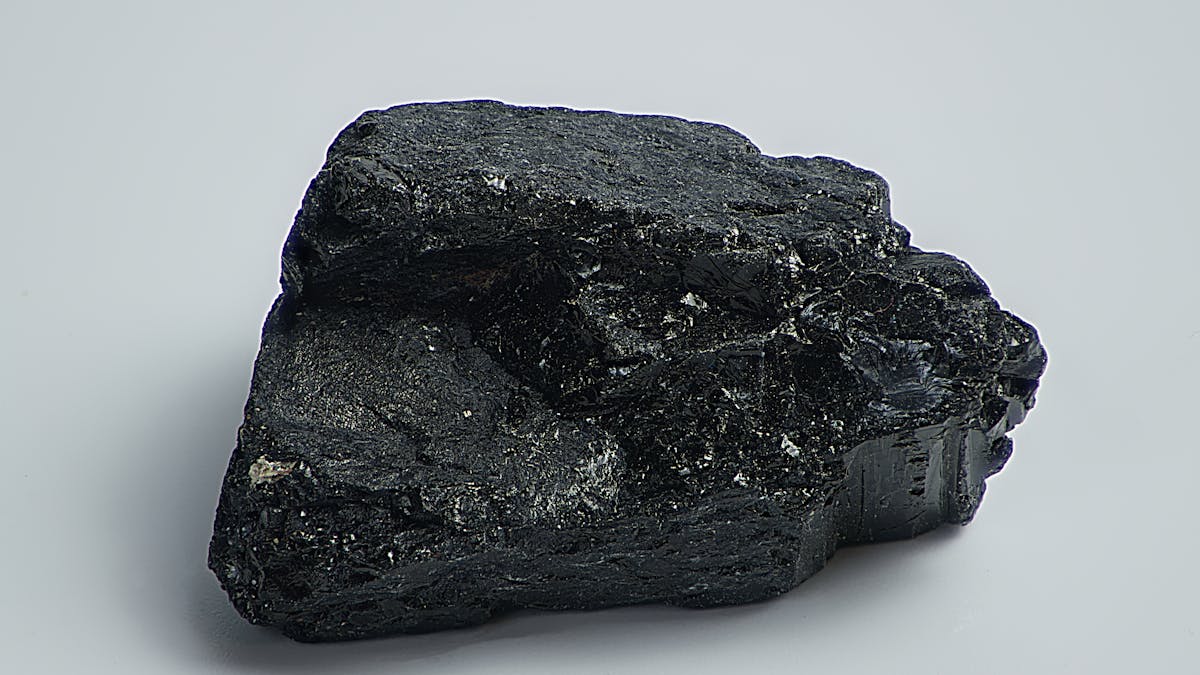
The geology community has understood the Skaergaard Intrusion for the better part of a century. Dartmouth’s earth sciences faculty — part of a research tradition spanning the Geological Survey of Denmark, Cambridge, Caltech, and the University of Oregon — has had academic access to one of the world’s most documented mafic intrusions for decades. The economic significance of its palladium content was confirmed in 1986. The investment community is only now catching up.
On March 4, 2026, Klotho Neurosciences Inc (NASDAQ: KLTO) closed its acquisition of Greenland Mines Corp, creating a NASDAQ-listed vehicle with institutional access to the western hemisphere’s largest documented palladium-gold deposit. The closing caps a convergence of four catalysts within a 60-day window: the 132.83 percent anti-dumping tariff on Russian palladium, the March 4 acquisition, resource expansion drilling aiming to approximately double the known resource to roughly 50 million ounces, and the Trump administration’s accelerating Greenland policy focus.
The Skaergaard Project documents 25.4 million ounces of palladium equivalent — including 17.15 million ounces of raw palladium, representing roughly 13 to 15 years of total U.S. palladium consumption — and 23.5 million ounces of gold equivalent, with a gross undiscounted in-situ resource value of approximately $68 billion based on February 2026 metal prices. The deposit sits in a coastal, accessible location in a stable, allied territory that has become the focus of western critical mineral strategy. It is fully permitted for exploration.
“On March 4, Klotho closed the acquisition of Greenland Mines Corp because the western hemisphere’s critical mineral supply chains must be rebuilt from real assets in allied jurisdictions — not from policy papers,” said Dr. Joseph Sinkule, Chairman and CEO of Klotho Neurosciences Inc. “Skaergaard is now under a NASDAQ-listed vehicle with institutional access. That is the foundation of that rebuild.”
Palladium matters to the Upper Valley and broader New England economy in ways that are not always visible. Raytheon Technologies, with major facilities across New Hampshire and southern New England, manufactures systems that depend on platinum-group metals throughout their supply chains. Dartmouth’s Thayer School of Engineering has research programs focused on clean energy systems and materials — areas where PGM supply chain security is a first-order design constraint. Vermont and New Hampshire’s growing cleantech and precision manufacturing sectors carry indirect exposure to palladium market dynamics.
What Skaergaard offers that most critical minerals stories do not is an immediate demand case. Palladium demand is structural and present: in every catalytic converter on every gasoline vehicle driven through the Upper Valley, in the semiconductor components in every piece of electronics manufactured in New England, and in the defense hardware built by New England’s defense industrial base. The 132.83 percent anti-dumping duty issued in February 2026 made the supply crisis concrete.
“The geological case for Skaergaard has been clear for years,” says Dr. Bo Moller Stensgaard, CEO of Greenland Mines Corp. “What changed is the policy and capital environment. The March 4 acquisition closing, the tariff, the expansion drilling program, and the administration’s Greenland focus — all converging in the same narrow window. The supply chain conversation that research institutions modeled theoretically is now a live operational priority.”
The New York Evening Mail reported on the Wall Street and institutional dimensions of the acquisition, providing additional context on how the financial community is approaching this convergence of factors.
Dr. Gustavo Delendatti, VP Exploration, oversees the Skaergaard technical program: “The resource is extensively documented under international reporting standards. Expansion drilling has potential to grow the resource to approximately 50 million ounces. The coastal location and jurisdictional quality of Greenland make this a development-stage asset, not a speculative prospect.”
For New England’s institutional investors, defense contractors, and the academic community that has tracked this deposit the longest, the March 4 acquisition marks the moment geological knowledge met strategic urgency — under a NASDAQ-listed vehicle designed for institutional participation.