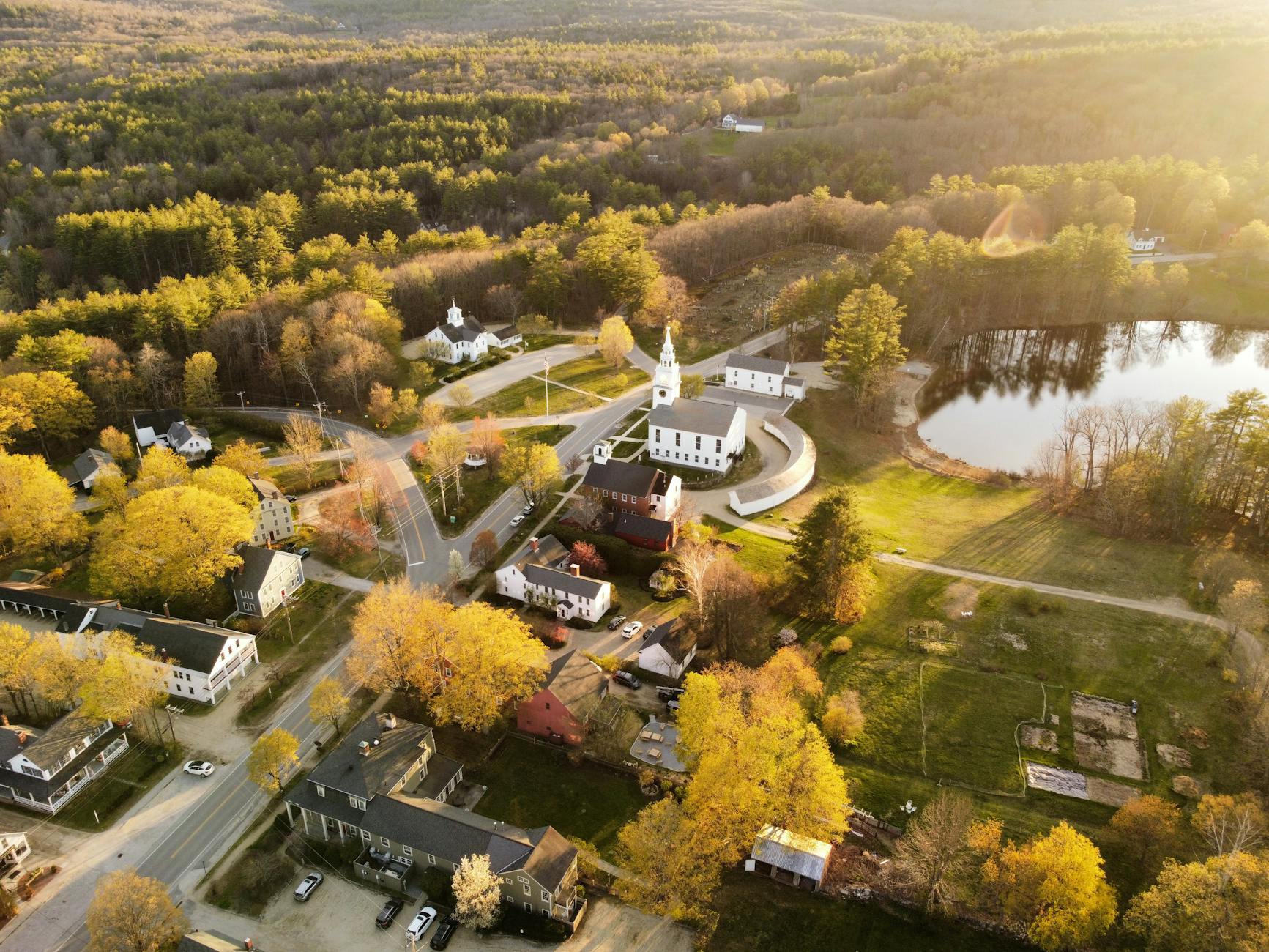
Occom Pond sits quiet most April mornings, ringed by bare maples just starting to bud. By midsummer, though, ponds across New Hampshire can turn a different color entirely: a swirling, sickly green that signals one of the state’s most persistent water quality problems.
Cyanobacteria blooms have been recorded in New Hampshire since the 1960s, according to Amy Smagula, chief aquatic biologist at the New Hampshire Department of Environmental Services and director of its center for limnology. More than 400 bloom incidents have been documented across the state’s roughly 1,000 lakes and ponds since then. That’s a lot of water at risk.
Cyanobacteria are microscopic organisms that thrive when water is warm and loaded with nutrients. When conditions tip in their favor, they multiply fast, forming dense concentrations called blooms. Certain strains produce toxins that can cause nausea and headaches at low exposure and life-threatening poisoning at high levels, according to the U.S. Environmental Protection Agency. Dogs are especially vulnerable. So are small children. Swimmers often can’t tell a toxic bloom from ordinary algae.
The drivers are familiar to anyone tracking climate and development pressures. Warmer summers extend the season when blooms can form. Fertilizer and sediment wash off lawns, farms, and roads into lake watersheds. More impervious surfaces mean more runoff. The Upper Valley isn’t immune. Lakes and ponds throughout Grafton and Windsor counties face the same pressures squeezing water bodies across the state.
So what’s being done, and what does it cost?
The New Hampshire Department of Environmental Services has worked alongside lake associations, land trusts, and municipalities on a range of approaches. The most common involve managing erosion and stormwater, Smagula said, whether through road improvements, better drainage infrastructure, or planting trees and vegetation along shorelines and roadsides to intercept nutrient-heavy runoff before it reaches the water. Chemical treatment exists as an option too, but the department treats it as a last resort. It typically costs hundreds of thousands of dollars per lake and isn’t a permanent fix.
Funding has been tight. The state Legislature allocated $1 million to the Cyanobacteria Mitigation Loan and Grant Fund in 2023, later supplemented by another $1 million in American Rescue Plan Act funding. That sounds meaningful until you consider the scale of what’s needed. Officials say the projects completed so far represent a fraction of what’s necessary to restore and protect the state’s water bodies.
The funding math gets complicated quickly. To access loan and grant dollars, municipalities and lake associations must contribute matching funds. Before they can even apply, they need a “watershed-based plan,” a comprehensive assessment of conditions specific to each lake’s ecosystem. Those plans cost money too, and the total picture of public and private spending on cyanobacteria mitigation is hard to pin down.
A proposal for a cyanobacteria funding task force is now headed to the governor’s desk, according to reporting by the New Hampshire Bulletin. The task force would examine how to close the gap between current funding and what the problem actually demands. Whether that leads to meaningful new investment is an open question.
For Dartmouth students and Upper Valley residents, this isn’t abstract. The Connecticut River, local swimming holes, and backcountry ponds that First-Year Trips groups paddle through each fall all sit within watersheds where these pressures operate. The Upper Valley Land Trust and similar organizations do some of this work locally, protecting shoreline buffers and conserving land that would otherwise feed runoff into waterways.
Still, conservation land and stormwater projects can only do so much when the underlying conditions keep shifting. Warmer springs arrive earlier now. Bloom season stretches longer.
The ponds look fine in April. That’s the thing. The problem tends to show up in August, when everyone’s already in the water.
Written by
Dartmouth Independent StaffContributing writer at The Dartmouth Independent
View all articles →