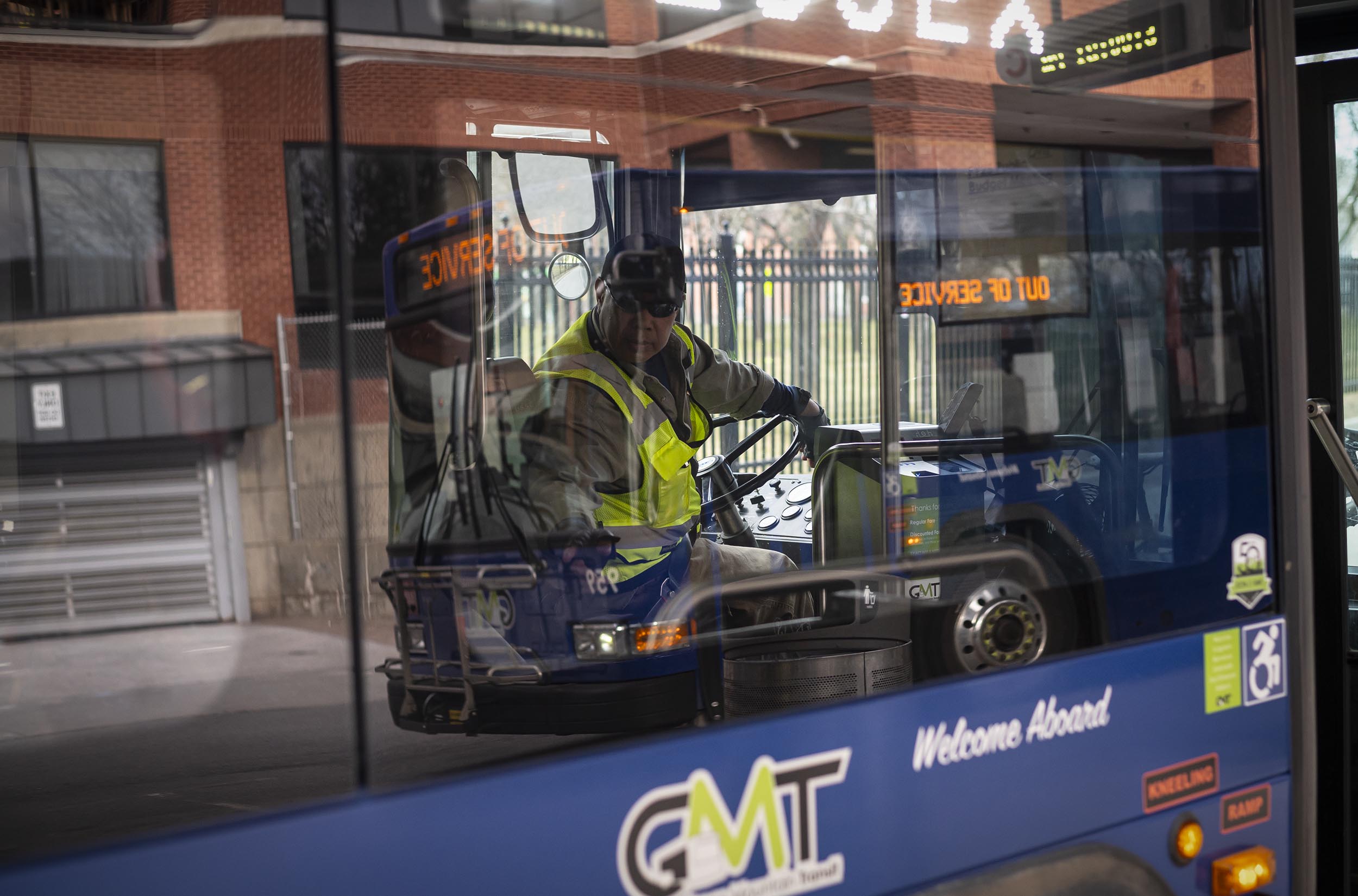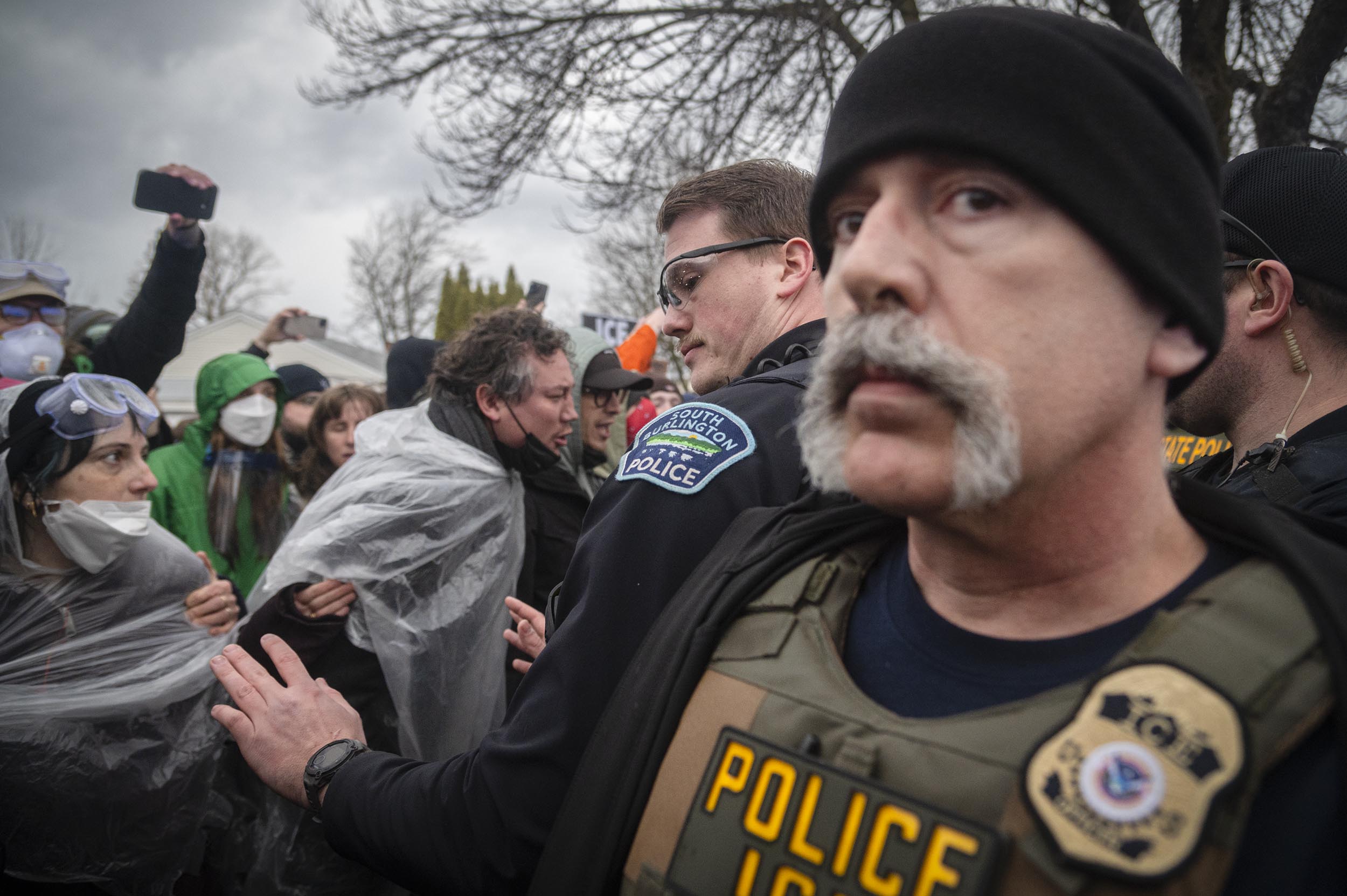
Federal immigration agents carried out a South Burlington enforcement operation on March 11 despite repeated objections from local and state police, according to two newly released reviews that document the breakdown in coordination before and during a standoff on Dorset Street that drew hundreds of protesters.
The reports, one from the city of South Burlington and one from the Vermont State Police, were released Thursday and Friday respectively. Both include body-camera footage and describe U.S. Immigration and Customs Enforcement agents resisting attempts to slow or halt the operation as crowds grew and tensions climbed.
The South Burlington report contains a direct exchange between Deputy Police Chief Sean Briscoe and ICE Supervisory Agent David Johnston that captures how little room local officers had to intervene. Briscoe approached Johnston and asked, “What’s the plan?” Johnston replied, “We’re getting a warrant and we’re gonna fucking enforce the warrant. We’re gonna fucking take those dudes,” according to the city’s internal review.
Briscoe pushed back. “At what point does it become not worth it for one person,” he said. Johnston answered, “When my management says it’s not.” A third person identified in the report as “another unnamed agent” then told Briscoe, “you’d do the same thing. It sounds like you’re on their side. It’s very frustrating.” When Briscoe said he wanted to prevent the situation from escalating, the agent replied, “Then you guys make sure it doesn’t escalate. We are getting that guy today. We’re gonna take him.”
That back-and-forth, made public for the first time in the South Burlington report, is one of several documented moments in which ICE agents rejected local concerns during the operation.
Vermont State Police released its own after-action review less than 24 hours after South Burlington published its findings. Vermont Public Safety Commissioner Jennifer Morrison wrote an introduction to the state report in which she said that in her 36 years in law enforcement she had never seen a multi-agency operation in which one agency was so far out of alignment with the others.
Morrison’s assessment was direct: “The resulting erosion of public confidence threatens to undo years of progress in community relations, placing all officers, regardless of agency, into a more volatile and distrustful environment,” she wrote, as VTDigger reported.
The March 11 operation drew national attention. South Burlington sits roughly 65 miles north of Hanover, and ICE enforcement actions across New England have prompted legal challenges, sanctuary policy debates, and community responses that extend well into the Upper Valley. Several Dartmouth students and Hanover residents attended solidarity events in the days after the Dorset Street standoff.
State and local departments have separate policies governing interaction with federal immigration enforcement. Vermont law limits cooperation with ICE detainer requests under state guidance from the Vermont Attorney General’s office. The two new reports suggest those legal limits weren’t the central friction point on March 11. The problem was operational. ICE agents weren’t coordinating with local commanders. They weren’t sharing their plan. And when South Burlington officers tried to slow the operation, they were told, in plain terms, that wasn’t happening.
No serious injuries were reported from the standoff. ICE did complete the arrests it came for that day.
The release of body-camera footage alongside both written reports is unusual and gives the public a granular record of events that municipal and state leaders say should not be repeated. South Burlington and Vermont State Police are both describing what they saw not as a joint operation but as a unilateral federal action carried out on their turf without meaningful collaboration. Morrison’s 36-year benchmark matters here. It’s not a rhetorical flourish. It’s a professional data point from someone who has worked through a lot of tense, complex situations and found this one singular.
The city of South Burlington has not announced changes to its protocol for responding to future federal enforcement operations, and ICE has not publicly commented on the reviews.
Written by
Dartmouth Independent StaffContributing writer at The Dartmouth Independent
View all articles →